Cat names get judged against a test built for dogs, and popular cat names quietly fail it.
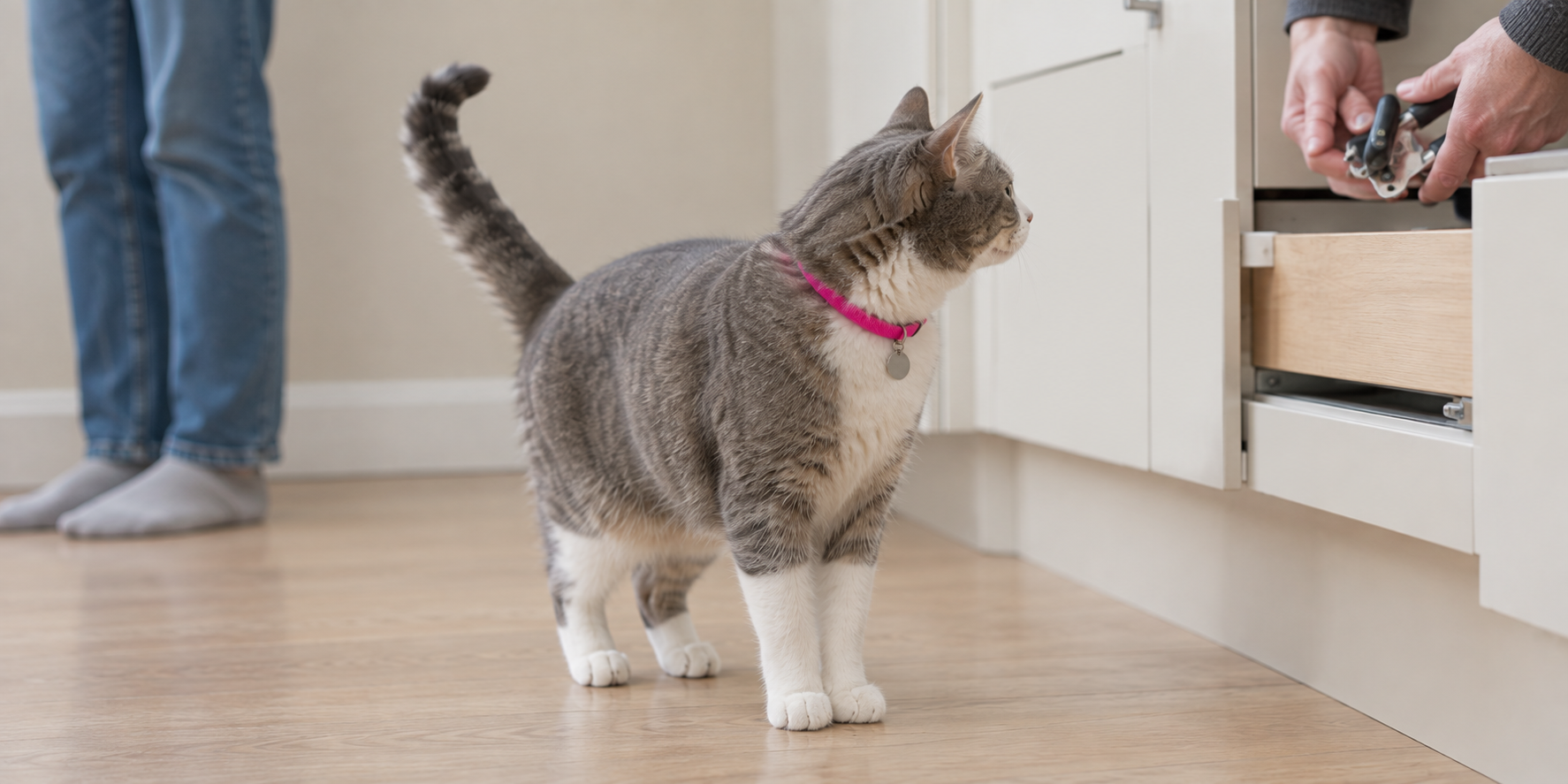
A dog name has to survive being shouted across a field into the wind. A cat name almost never travels further than a kitchen. What it competes with is a can opener, a refrigerator door and the rustle of one particular packet, all of which already predict food reliably and none of which is your voice.
So the property that matters is not carry, it is cut. That single swap changes which names are good, and it is missing from every list on the first page of results. This page is the test. The girl cat names shortlist is on the page below it, and the wider argument about what the name is doing sits on the pillar above.
Which names do cats respond to best?
Ones with a hard attack at the front and a bright vowel, said higher than you normally speak.
Cats hear a wider range of frequencies than people and most dogs, per the Merck Veterinary Manual, and the top of your voice is the part of it that reaches her cleanly. A name that opens on a whisper has nothing to cut through a room with, which is why the soft, pretty ones underperform.
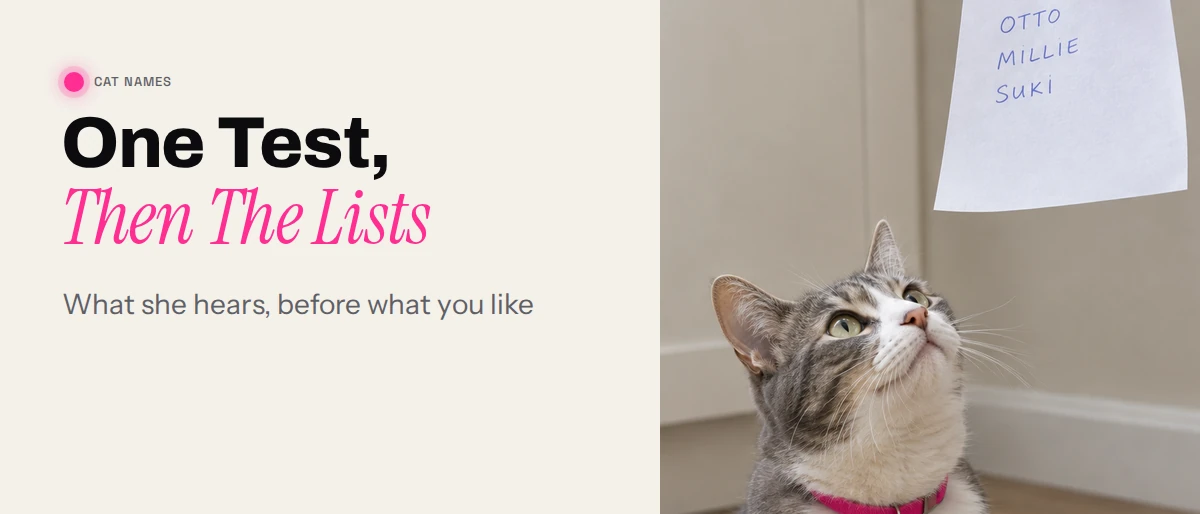
Otto, Millie, Kiki, Bertie, Suki, Ziggy. Say each of those the way you would if you were pleased to see her, then say them flatly. The difference in her ears is larger than the difference in yours.
The one-line test: can you say it at the pitch you use for good news without feeling ridiculous? If the name only works said seriously, it is going to be ignored.
Do cats even learn their names?
Yes, and the ignoring is a separate problem from the hearing.
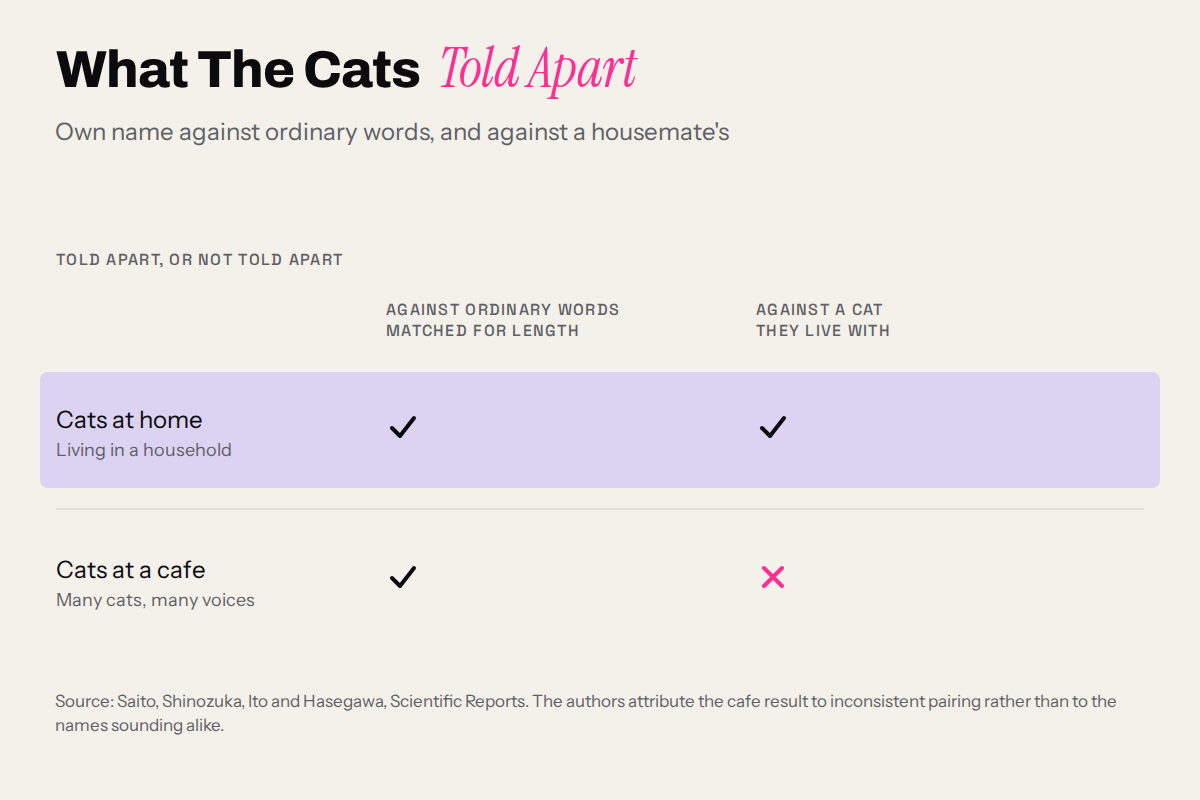
A study in Scientific Reports found that household cats distinguished their own name from ordinary words matched to it for length and accent, and kept doing it when a stranger read the words out. Recognition is not the bottleneck.
The bottleneck is what the sound predicts. She has learned what every noise in the house is followed by, and a name used constantly with nothing attached has become one more piece of furniture. Say it once, then produce something worth turning around for.
That is also the whole mechanism behind renaming. Pair the new sound with food until the head turns before the bowl appears, and the age of the cat matters far less than people expect.
Are popular cat names or unique cat names better?
Neither on their own. What decides it is how many of them are in your clinic's waiting room.
A common name is common because it is easy to say, which is a real argument rather than a failing. The cost is local: a shelter can be holding more than one Shadow at a time, and the name stops identifying her at the exact moment somebody needs it to.
Unique cat names fix that and introduce a different failure, which is spelling. A name nobody can spell arrives on four records in four versions. Uncommon word, ordinary spelling, and you have both.
There is also no national list to sit on. Nobody counts the names Americans actually use, so every published ranking is one company's customer base.
Trupanion's 2026 list, for instance, is drawn from the cats and dogs enrolled on its own policies in the previous year, which puts Luna, Milo and Willow near the top. That tells you those names are common among insured kittens. It does not tell you they are good.
Are kitten names worth choosing differently?
Only in one respect: she will be a cat for far longer than she is a kitten.
The acoustics are identical at eight weeks and eight years. What changes is the risk of describing the animal in front of you rather than the one she becomes. Kitten names like Tiny, Squeak, Nugget and Titch are accurate in October and describe nothing by spring.
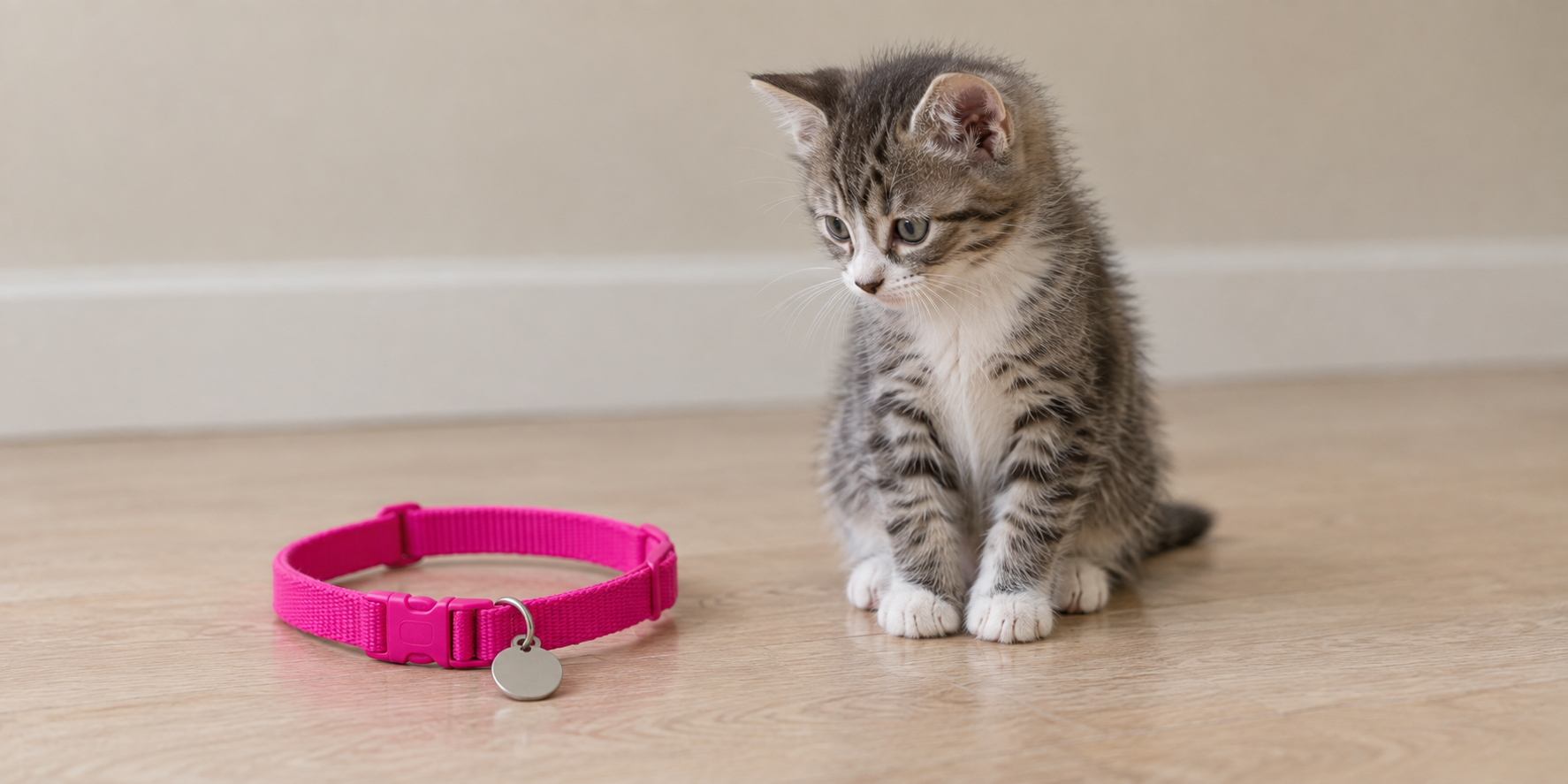
Timing matters more than the shortlist does. She is working out which sounds predict food during exactly the weeks you are still deciding, so a name settled in the first week has a head start on one settled in the sixth.
There is one practical reason to hurry that has nothing to do with her. The chip registration and the first vaccination record both get written in that same window, and a name still under discussion is a name that reaches those two documents in two different spellings.
What changes for a girl, a boy or a black cat?
The girl cat names page has the shortlist. A boy or a black cat changes the test in one way each.
Girl cat names takes the softness problem head on, because soft is the quality people reach for and the one that disappears under a dishwasher. That page covers which names collide with your own feeding cue, and what to do about a second cat whose name sits too close to the first.
For a boy, the instinct runs the other way. Low, serious, weighty names get chosen for gravitas and are the ones that vanish under a television, so pick one you can say brightly, and one that will not be embarrassing on a full grown cat years from now.
For a black cat, the name does a second job, because a photograph of a black cat identifies almost nothing. The record and the name end up carrying the work her appearance cannot.
What does the name have to survive besides the kitchen?
A chip registry, a clinic file, an insurance policy and possibly a poster, all agreeing with each other.
This is where the US differs from most naming advice you will read, and it cuts the other way from how it sounds. There is no federal requirement to microchip a cat and no national registry behind it. The AVMA's position is that implanting the chip is only the first step and that the registration has to be completed and kept current, which means the name attached to her is whatever somebody typed, in whatever hurry, on whichever database the clinic happened to use.
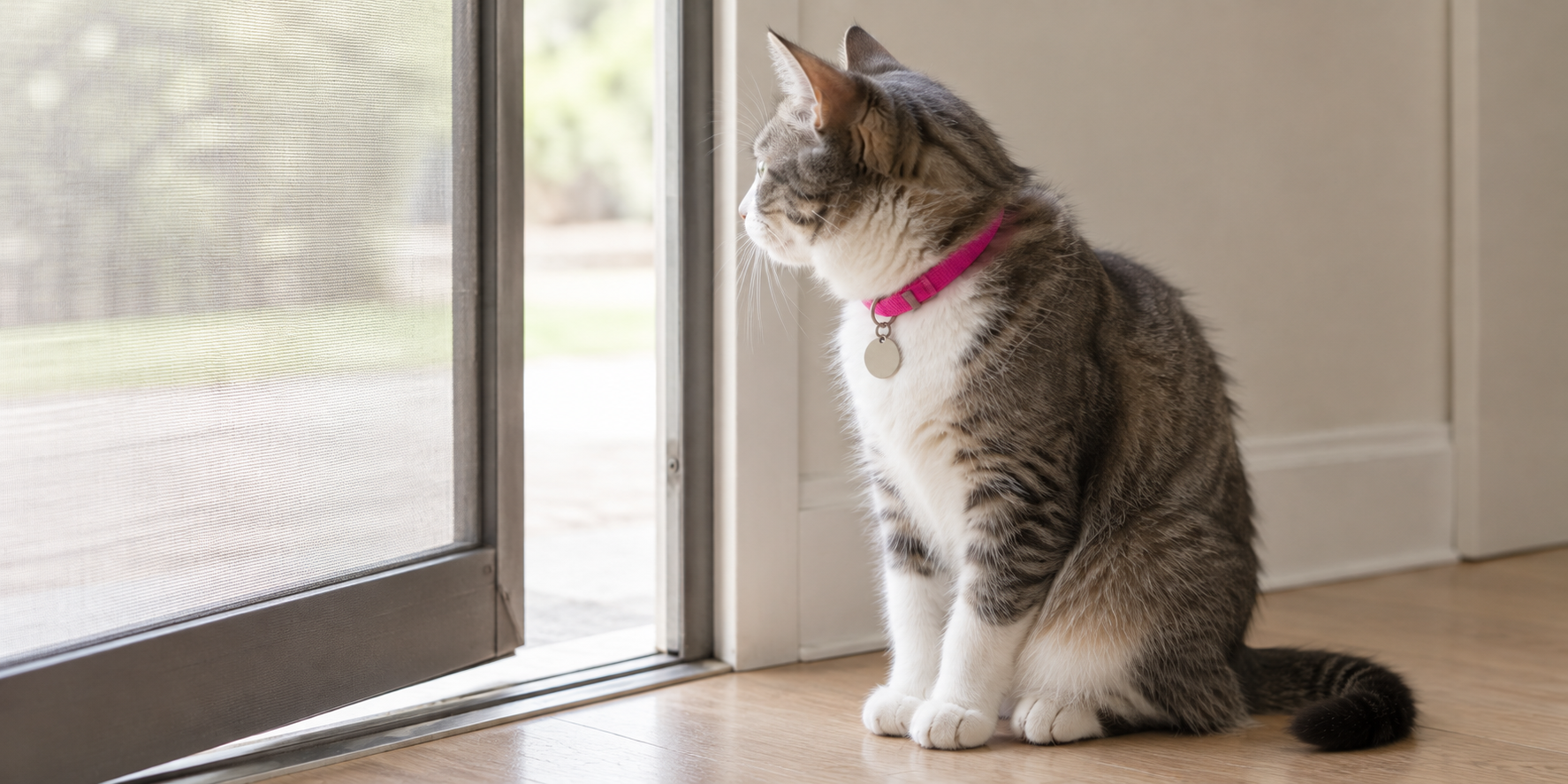
The failure is four near misses rather than one wrong entry. Millie on the chip, Milly on the insurance, Milli at the clinic and Mil in the boarding book. Each is defensible and the set of them matches nothing when a scanner reads one and a person searches another.
Settle the spelling on day one and keep it somewhere that is not your memory. For an indoor cat that feels like paperwork for its own sake right up until the day a door is left open. It is the same problem as every date in looking after a pet, which is easy to know and easy to lose, and it is the thinking behind giving your pet their own page on pookii: the spelling that does not drift.
What else do people ask about naming a cat?
What are the most popular cat names in the US?
Nobody counts them nationally, so every published ranking is a sample of one company's customers. Luna, Milo, Willow and Leo sit near the top of most of them, which tells you they are common rather than that they work.
What is a female cat called, and a male?
A queen and a tom. Queen properly means an unspayed female used for breeding and tom an unneutered male, though both get used loosely. You will meet the terms on a pedigree certificate or a rescue form rather than anywhere that affects daily life.
Should I keep the name a rescue gave her?
Through the settling in period, if she visibly responds to it. Changing it later costs you a stretch of pairing the new sound with food, and doing that while she is still deciding whether your house is permanent makes both jobs harder than they need to be.
Do cats respond better to names ending in a vowel?
To bright vowels, yes, and particularly to an "ee" ending, because it sits high in the range they hear best. That is the reason Millie, Suki and Bertie outperform names of the same length that end on a flat consonant.
Can two cats in one house have similar names?
They can, and the study suggests the names are not the problem. Household cats told their own name from the name of a cat they lived with. The ones that could not were cafe cats, and the authors point at inconsistent pairing rather than at the sounds being alike.
Does it matter what the name means?
Not to her. Meaning is entirely for you, and it is worth something, because a name you like saying is a name you will say in the voice she actually responds to.
How long should I wait before deciding?
Less time than most people take. She is learning which sounds predict food in her first weeks with you, and the chip registration and the first clinic record both want a spelling before you have finished arguing about it.