You want something you can shout.
That is the whole of it, and it is the part every list of pet names leaves out, because choosing one feels like a creative decision and it is mostly an acoustic one. The word has to carry across a field with a wind on it, out of a mouth that is slightly panicked, to an animal forty yards away and interested in something else.
Two syllables usually do that better than one or three, which is why the lists of one syllable dog names are only half right. A bright vowel at the end carries further than a soft consonant. And whatever you pick, you are going to say it dozens of times a day for the next twelve to fifteen years, in front of other people, in a voice you would not use at work.
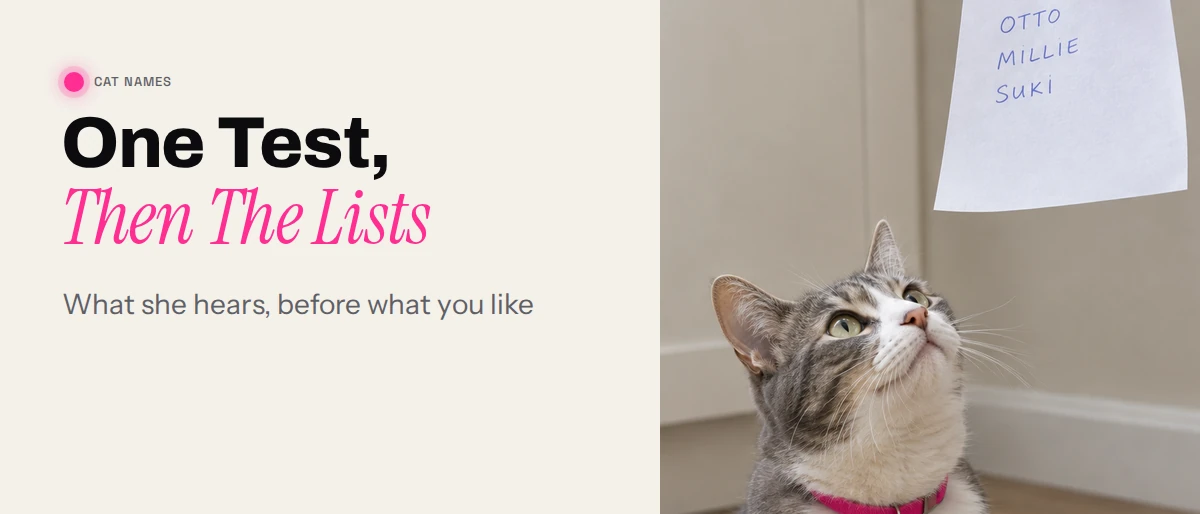
So say it out loud before you commit. Not in your head. Out loud, in the tone you would use to call something back off a trail, and preferably where somebody can hear you. Half the names that look lovely written down fall apart the moment they have to be shouted, and you will not discover that until week three.
That is the short version. The rest of this page is the part nobody tells you, which is that the name you choose is doing three separate jobs, and you only ever plan for one of them.
Is a name a label, or a sound you are training?
A sound you are training.
Here is the thing that reframes the whole exercise. Your pet does not know their name.
They know a sound that reliably predicts something good happening. That is all a name is to a dog or a cat: a conditioned cue, built by pairing the noise with food and attention often enough that it becomes the most interesting sound in the room. Which means the name itself matters far less than what you do with it, and it also means you can break it. Say it constantly into the middle distance with nothing attached and you will teach a dog that the sound means nothing in particular, which is exactly what has happened to every dog you have watched ignore its owner in a park.
Now, the advice you will meet everywhere is that dogs respond better to names with hard consonants and two syllables. You will find that repeated on naming page after naming page. The evidence behind it is much thinner than the confidence with which it is stated, and we would rather say so than pass it on. What holds up is duller: short is easier to say sharply, consistent is what builds the response, and a sound that stands out from household noise gets noticed more than one that blends into it.
There is one acoustic rule that is worth taking seriously though, and it is the next section, because getting it wrong costs you months.
Which names quietly sabotage your training?
Any name that sounds like a cue you are about to spend a year teaching.
Bo and no. Kit and sit. Jay and stay. Dee and leave it, if you clip it the way anyone does when they are in a hurry.
Your dog is not parsing English. They are discriminating between sounds, and two sounds that differ by one soft consonant are two sounds they will confuse for months while you stand there wondering why the recall is inconsistent.
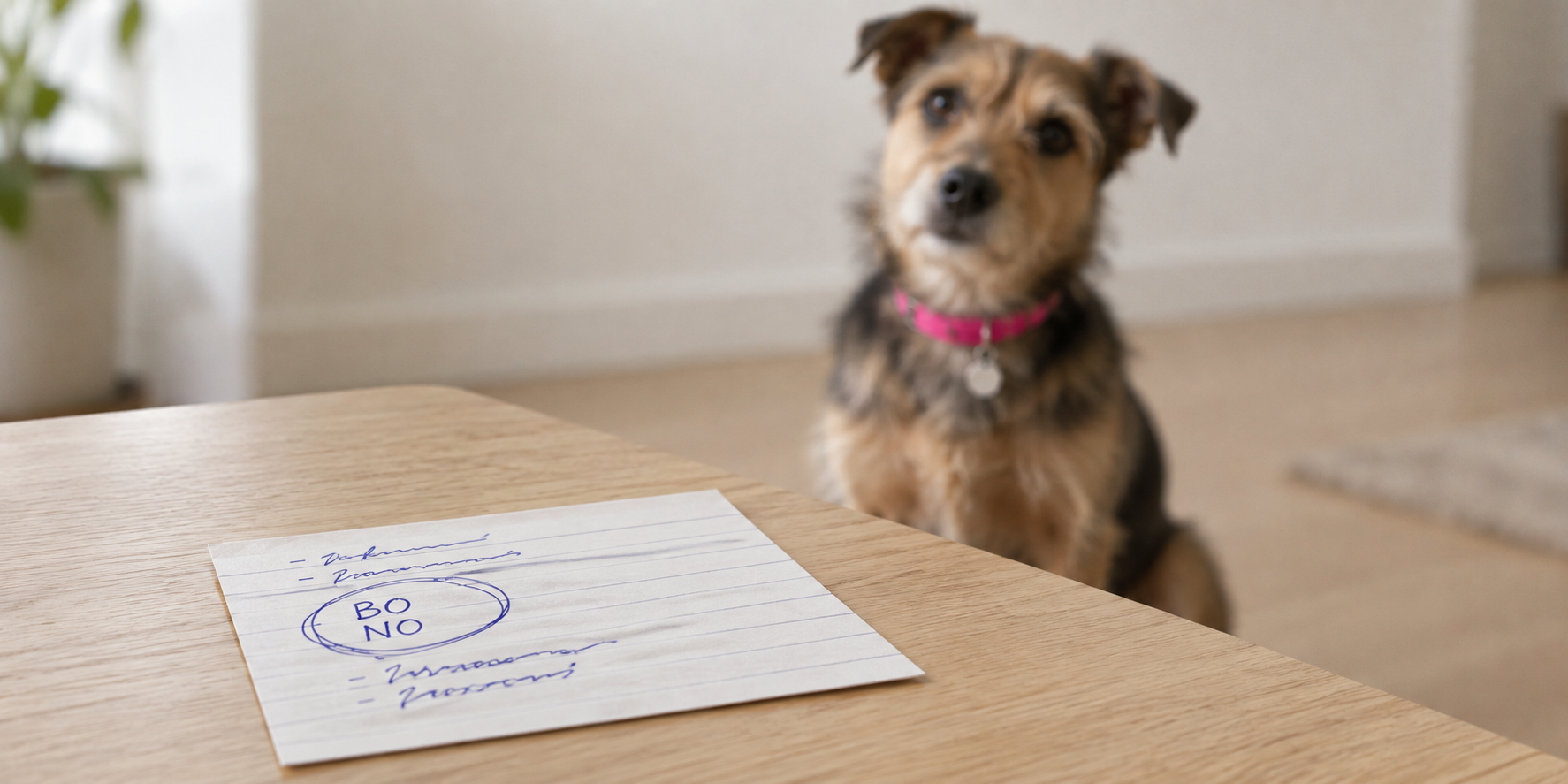
The same applies to household names. If there is a Millie in the family, do not call the puppy Tilly. If somebody in the house is called Kai, Skye is a poor choice. You will spend a year watching the wrong head come up.
Test it before you commit. Say the name, then say your five most likely cues after it, out loud, quickly, in the order you would use them in a real moment: name, come, sit, wait, leave it, off. If any two of those blur into each other when you are rushing, pick again now rather than in March.
Can you rename a rescue dog or cat?
Yes, and it takes about two weeks.
People agonize over this and they do not need to.
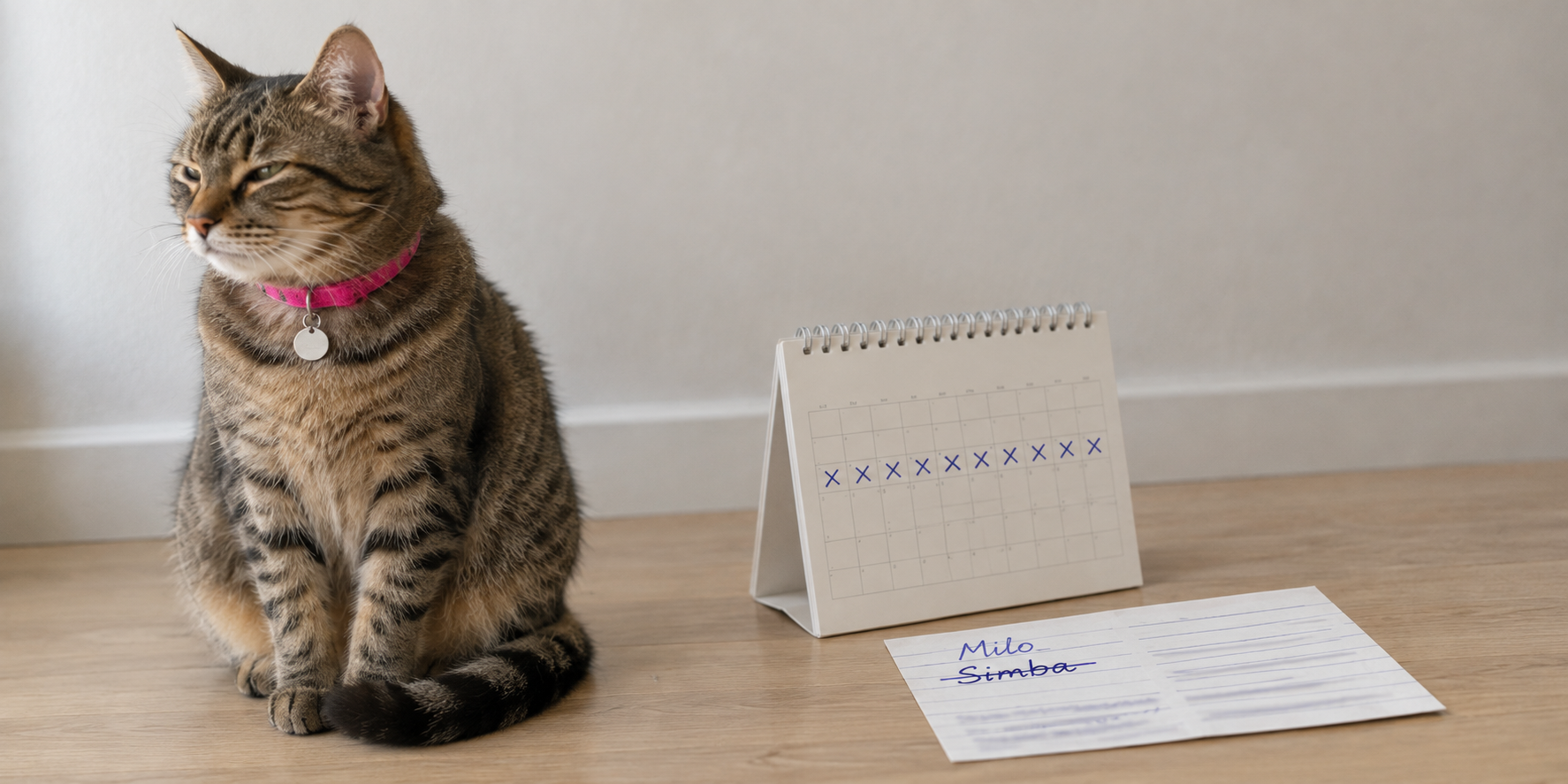
Because the name is a conditioned sound rather than an identity, an adopted dog or cat has no attachment to the old one in the way a person would. They have a learned association, and associations can be built again. Pair the new sound with food, several times a day, in a quiet room where nothing else is competing, and expect a response inside two weeks.
There is a case for changing it, too. A dog who has spent time in a shelter may have heard the old name called down a run of kennels, or attached to being moved somewhere, and a fresh sound comes with none of that. If the shelter name never suited the animal in front of you, the animal will not mind.
The exception is worth naming. An older animal, one who is losing their hearing, or one who is already unsettled by everything else changing at once, is better left alone for a few weeks. Change one thing at a time, and the name is the least urgent of them.
Where do pet names actually end up?
On at least six records, and not one of them talks to another.
This is the job of the name that gets no thought at all, and it is the one that causes the actual problems.
Once you have chosen it, that word goes on the microchip registry. It goes on your insurance policy. It goes on the veterinarian's clinical record, the boarding facility's booking, the groomer's book, the day care register. And if your city or county licenses pets, it goes there too: the AVMA's model control ordinance has the license application carrying "the name, species, breed, primary color, age, and sex of the animal", which is the version most local ordinances are built from.
None of those systems talk to each other, and each is held by an organization that will spell it slightly differently unless you are careful.
The microchip is the one worth understanding properly, because the chip is not the record. The number on it is useless until it is registered, and AVMA's microchipping guidance puts the whole job on the owner: register the chip with a registry, have it scanned once a year to confirm it still reads, and keep the contact details current. A chip carrying a phone number you gave up two moves ago does the job of no chip at all.
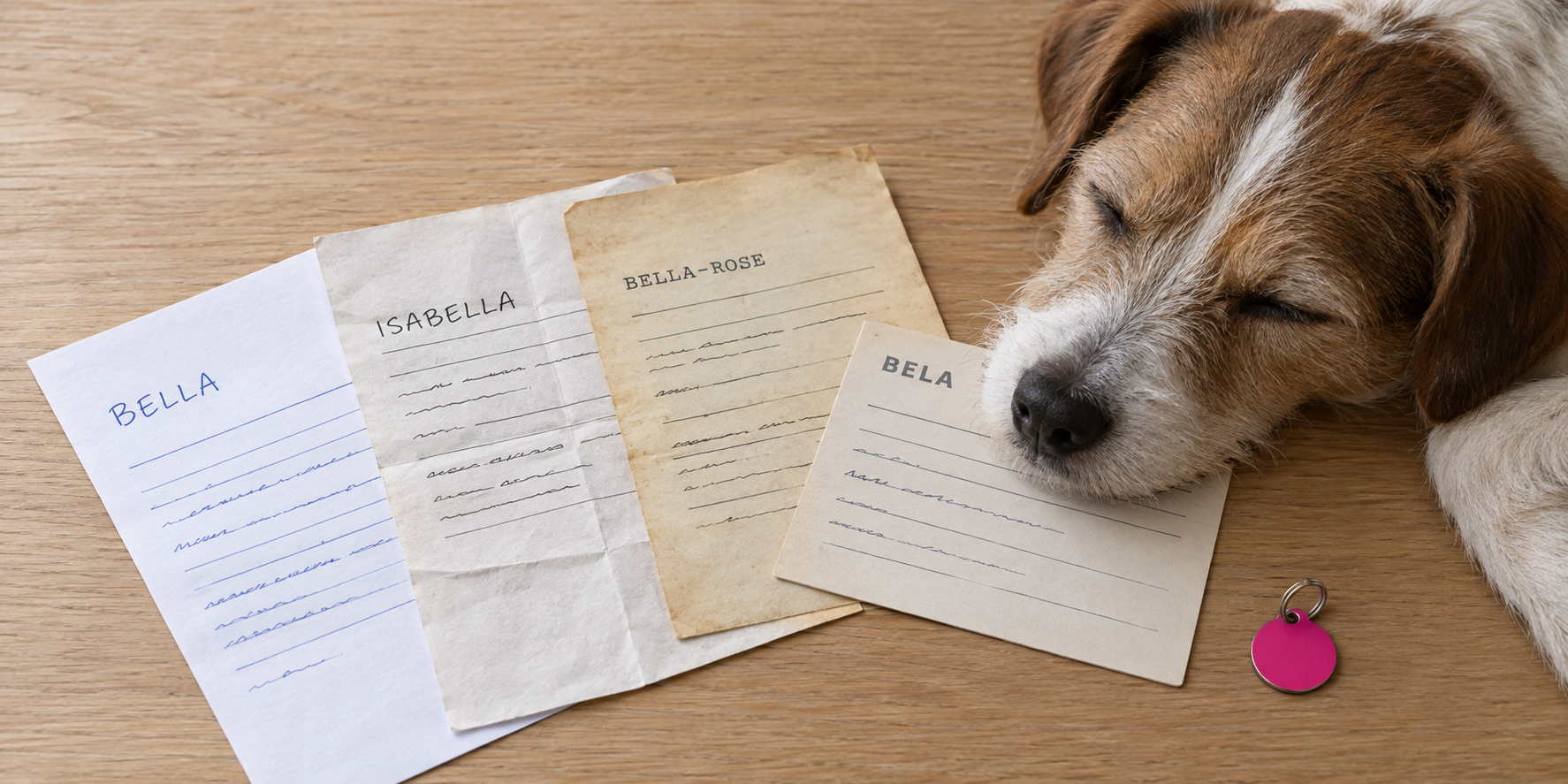
A name that does not match across those records is the quieter version of the same failure. The boarding facility has Bella, the insurer has Isabella, the clinic has Bella-Rose, and the day somebody needs to match a record quickly is the day it matters.
Two practical things follow from that.
Pick the spelling once and write it down somewhere that is not your memory. If you are going to use a full name and a called name, decide now which one goes on official records, and use that one consistently everywhere. Sophie on the chip and Soph in the yard is fine. Sophie on the chip, Sophia on the insurance and Sofie at the clinic is the problem.
And check the apostrophes and hyphens. Systems handle them badly, search fields break on them, and a dog called O'Malley will spend his life being three different animals across four databases.
Do kennel club names matter if you never show the dog?
Only if the dog is AKC registered, and even then the front half of that name is usually the breeder's rather than yours.
Anyone buying a registered dog runs into this and it surprises them. The name on the registration and the name you call the dog are two different things, and the registered one is far less flexible than people assume.
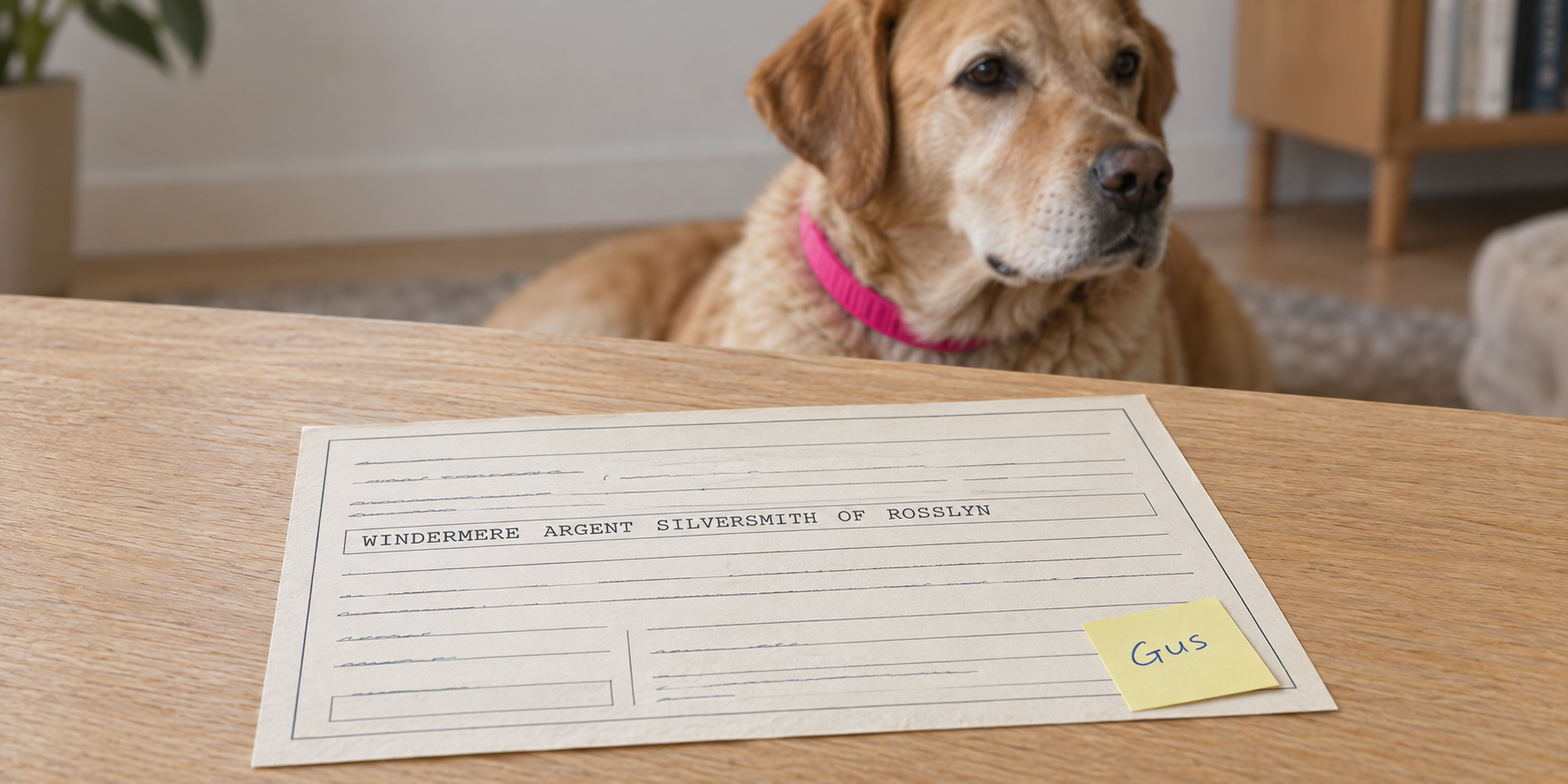
The rules are specific and they are published. Under the AKC's naming rules, a registered name runs to 50 characters, and spaces, apostrophes and hyphens all count toward that. Past 36 characters there is an extra fee.
A registered kennel name cannot appear in your dog's name at all unless the owner of that kennel name authorizes it, which is why show dogs carry a family prefix that was never the buyer's to choose. Kennel club names, in other words, are somebody's property before they are anybody's idea. Roman numerals cannot sit at the end either.
And a short list of words is barred outright: champion, champ, sieger or any other AKC title or show term, obscenities, and the working vocabulary of breeding itself, kennel, male, stud, sire, bitch, dam and female. A breed name on its own is not allowed.
Changing it later is possible, which is more than the UK allows, and it has been since the AKC changed the rule in March 2008. The conditions are narrow. The dog has to have been whelped in the United States, it cannot have produced or sired an AKC registered litter, and it cannot have received an award at an AKC licensed or member event.
If the litter owner was the dog's first registered owner, their written consent is required. If the current name contains a registered kennel name, the kennel name owner has to sign. The Dog Name Change Authorization form costs $25 and wants the original registration certificate with it.
None of which stops you calling the dog whatever you like at home. It does mean that if the registered name matters to you, the moment to care about it is before the paperwork goes in, and that once the dog has one win or one litter behind it, the name is fixed for good.
Why does every most popular names list disagree?
Because there is no national register of pet names, so every list you read is one company's customer database.
One says Luna, Bella and Daisy. Another has Milo, Teddy and Charlie in a different order. A third has names you have never heard anyone use. They cannot all be right, and now you know why.
An insurer's list reflects people who insure. A registry's list reflects people who register. A microchip database skews to whoever it registered.
The two biggest US lists show it cleanly. The AKC's ranking is drawn from purebred registrations and Canine Partners enrollments, so it is a census of people who register dogs with the AKC. Trupanion's 2026 ranking is drawn from more than 130,000 puppies and kittens enrolled with one insurer in a single year, so it is a census of people who insure young animals.
Both put Luna first. After that they part company immediately: the AKC's leading boy name is Max, which does not appear in Trupanion's top five at all.
Cat lists are built the same way, out of the same kind of database, and they disagree with each other for the same reason. The difference is that fewer organizations hold a large enough sample of cats to publish one at all, so the cat lists you find tend to be recycled from a smaller number of original sources than the dog ones.
So read them as what they are, which is a snapshot of one company's customers, rather than a ranking of the country. If your reason for looking is to avoid a name four dogs at your local dog park already have, a national brand's list will not tell you that anyway. Standing at the park on a Saturday morning will.
Are the best dog names always the short ones?
Usually, and not because short is better. Because short survives being said badly.
A short name is easier to say sharply and it cuts through background noise, which is the whole job it has to do at forty yards. The one syllable dog names people swear by, Max and Bear and Gus, win on exactly that count. The limit is the one from two sections ago: the shorter it gets, the more easily it collides with a cue.
The names people still like a decade later tend to share three unglamorous properties.
They are easy to say when you are tired. They do not date, which mostly means they are not tied to a show, a film or an athlete who will be forgotten in four years. And they suit an adult animal rather than a small one, because the puppy phase is roughly four months and the rest of it is fifteen years.
Bear is a good name for a Newfoundland. Bear is a name you will explain for a decade if the dog turns out to be a whippet.
The one piece of advice that survives every list: live with the shortlist for a few days before you decide. Use each name out loud, at the animal, in the house and outside it. There is usually one on the list that quietly stops feeling right by day three, and that is the process working.
Where do the dog names and cat names live?
One level down, in the two sections below.
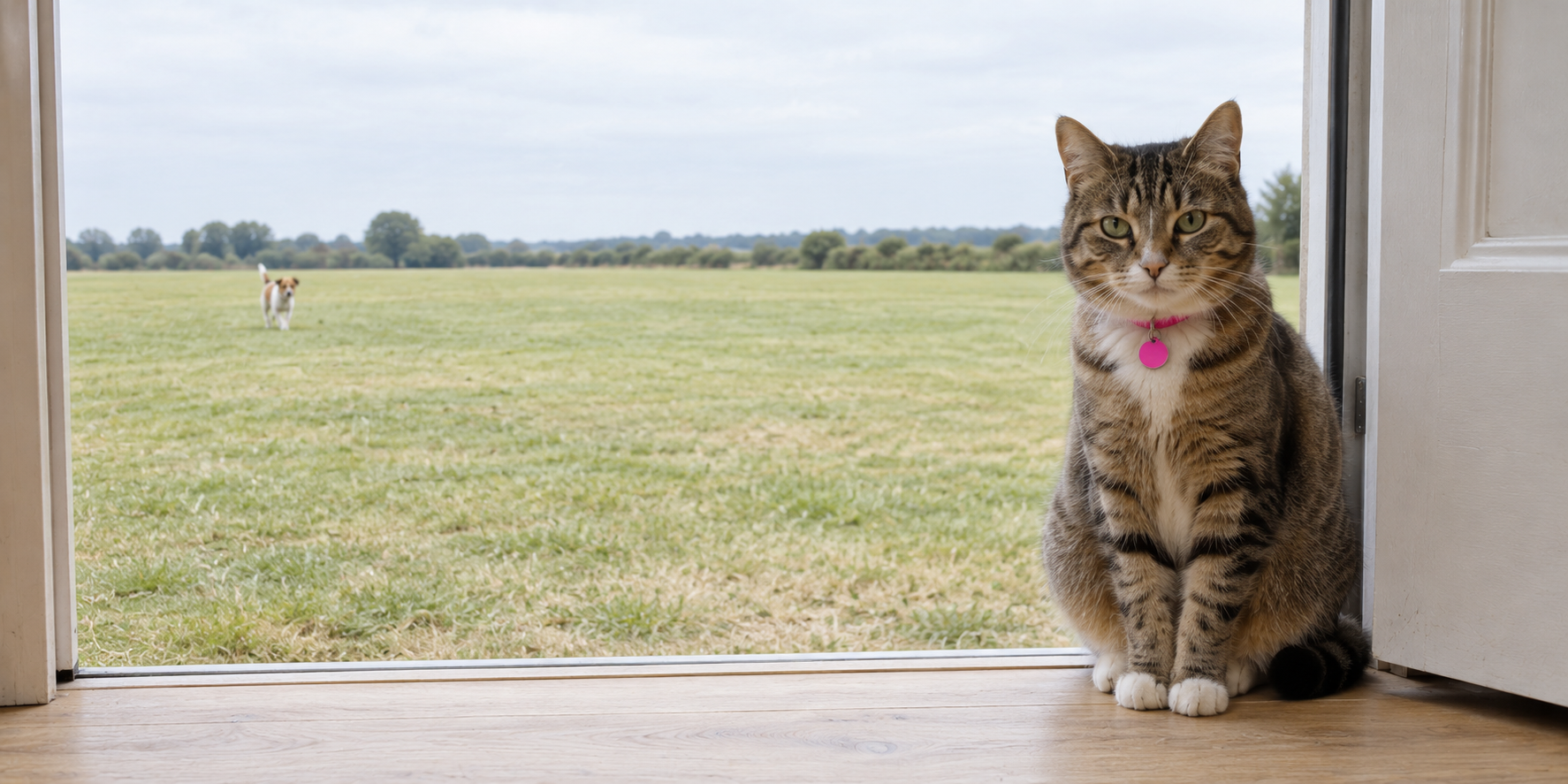
The dog names section is the test a name has to pass outdoors: its shape, the commands it can collide with, and one spelling across every record. The cat names section is about what a cat can actually hear, and girl cat names puts that to work on a shortlist.
Whichever one you land on, the last job is the unglamorous one from earlier: writing the spelling down somewhere it will still be right in eight years. That is the thinking behind giving your pet their own page on pookii, one spelling everything else copies, so the chip, the policy and the clinic are not quietly holding three versions of the same animal.
What else do people ask about naming a pet?
What is a female cat called?
A queen. An unneutered adult male is a tom, and a neutered male is sometimes called a gib, though almost nobody uses that outside breeding circles. This one catches people out because it sounds like a naming question and it is a terminology question: it is the word for the animal, not a name for her.
What is a male dog called?
A dog. That is the answer, and it is why the question gets asked so often. In breeding contexts an intact male is a dog and a female is a bitch, which is why the word turns up in registration paperwork without any rudeness intended. A male used for breeding is a stud dog.
What makes a good dog name?
Something you can say sharply, that does not collide with the cues you will train, and that you are willing to shout in public. Two syllables is the usual advice because it is easy to say with emphasis, and it holds up for that reason rather than for any deeper one.
What is the most common pet name in the United States?
Luna, if you go by the two largest published lists, which is the only thing they agree on. The AKC's ranking, built from purebred registrations and Canine Partners enrollments, and Trupanion's, built from more than 130,000 insured puppies and kittens, both put Luna first and then diverge immediately. There is no national register of pet names, so every published ranking is a snapshot of whoever that business happens to insure or register.
Can you change an AKC registered dog's name?
Yes, under conditions. The dog has to have been whelped in the United States, it cannot have produced or sired an AKC registered litter, and it cannot have won an award at an AKC licensed or member event. Written consent is needed from the litter owner if they registered the dog, and from the kennel name owner if the name contains one. The form costs $25.