If your cat keeps trying to pee but produces little or nothing, call your veterinarian immediately. A urinary blockage is an emergency, especially in male cats. Straining can look like constipation, so do not wait to be certain which it is.
For everything else, the mystery puddle still deserves attention. You can adore your cat and be deeply unenthusiastic about washing the comforter at midnight. Both feelings are allowed.
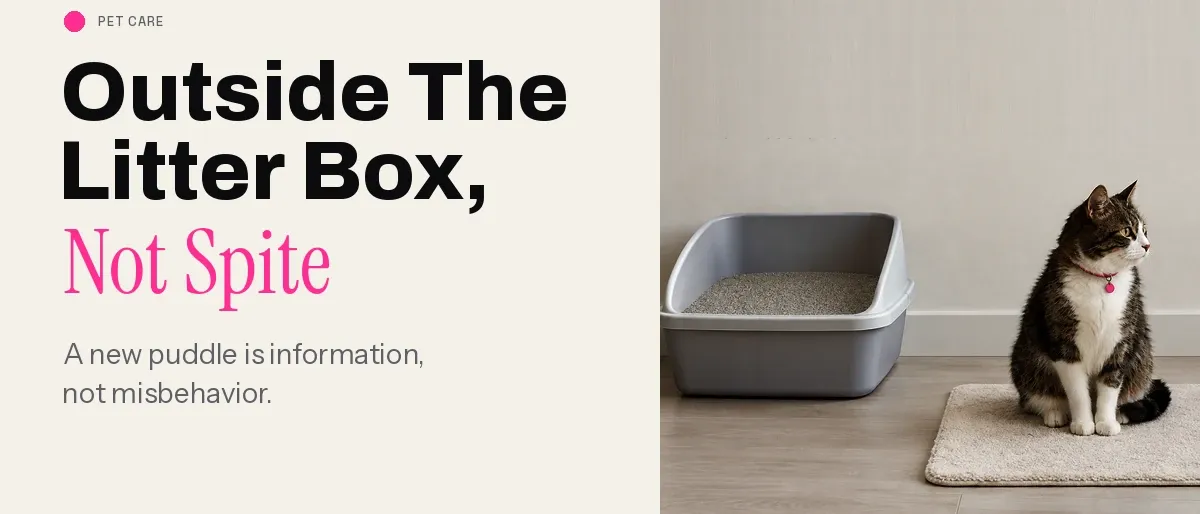
Peeing outside the litter box can involve pain, illness, stress, or a setup that does not work for your cat. A new pattern is worth a veterinary check before you treat it as a training problem, the same as any sudden change in a cat's habits.
Is my cat spraying or having trouble peeing?
Is your cat squatting and leaving a puddle, or standing with a raised, quivering tail and depositing a little urine on a vertical surface? The second pattern often suggests spraying, a form of scent marking. These clues can help your vet, but they are not a home diagnosis.
Note whether the cat is visiting the litter box more often, licking their back end, crying or passing blood. If they are struggling to pass urine, treat it as urgent even if you see a few drops. Do not press on their abdomen or attempt to empty their bladder.
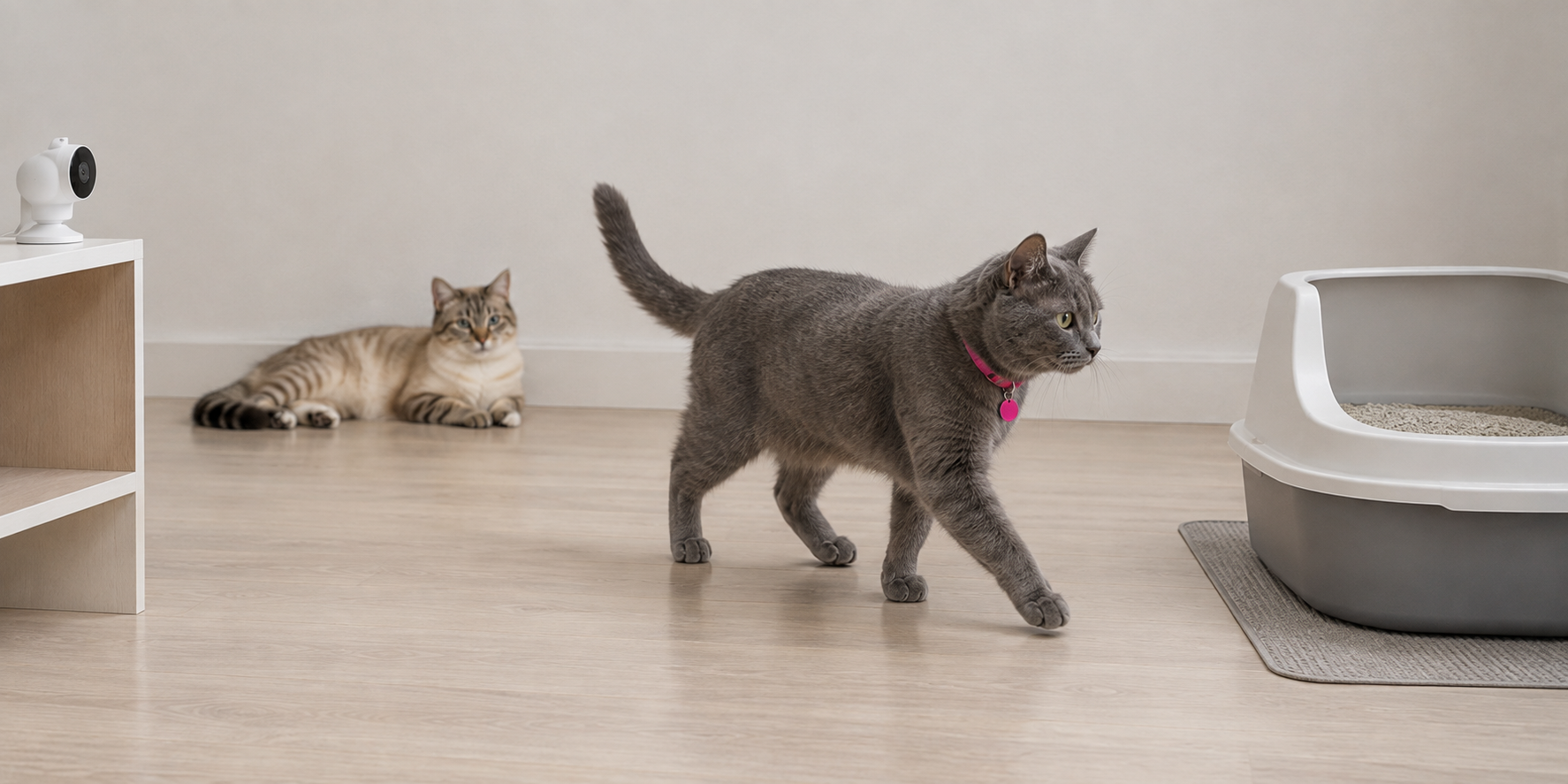
If you have several cats, try to identify who is affected by watching calmly or using an existing pet camera. Finding the puddle and guessing which cat “looks guilty” is not especially scientific.
Why the vet check matters
Urinary inflammation can make peeing painful or urgent. Other health problems and reduced mobility can also interfere with getting to or using a litter box. A cat can look otherwise well while a medical problem is developing. A change in how much they sleep is another quiet clue worth mentioning.
Appetite is the other early signal worth watching in the same window. A cat who stops eating needs the same early call, and largely for the same reason.
One possible diagnosis is feline idiopathic cystitis, a painful bladder condition in which stress can play a role. That does not make it imaginary or something a scented litter can fix. Treatment and prevention need to fit the individual cat.
Ask your vet whether they want a urine sample and how to collect it. Do not delay an urgent visit while trying to get one.
How many litter boxes does a cat need?
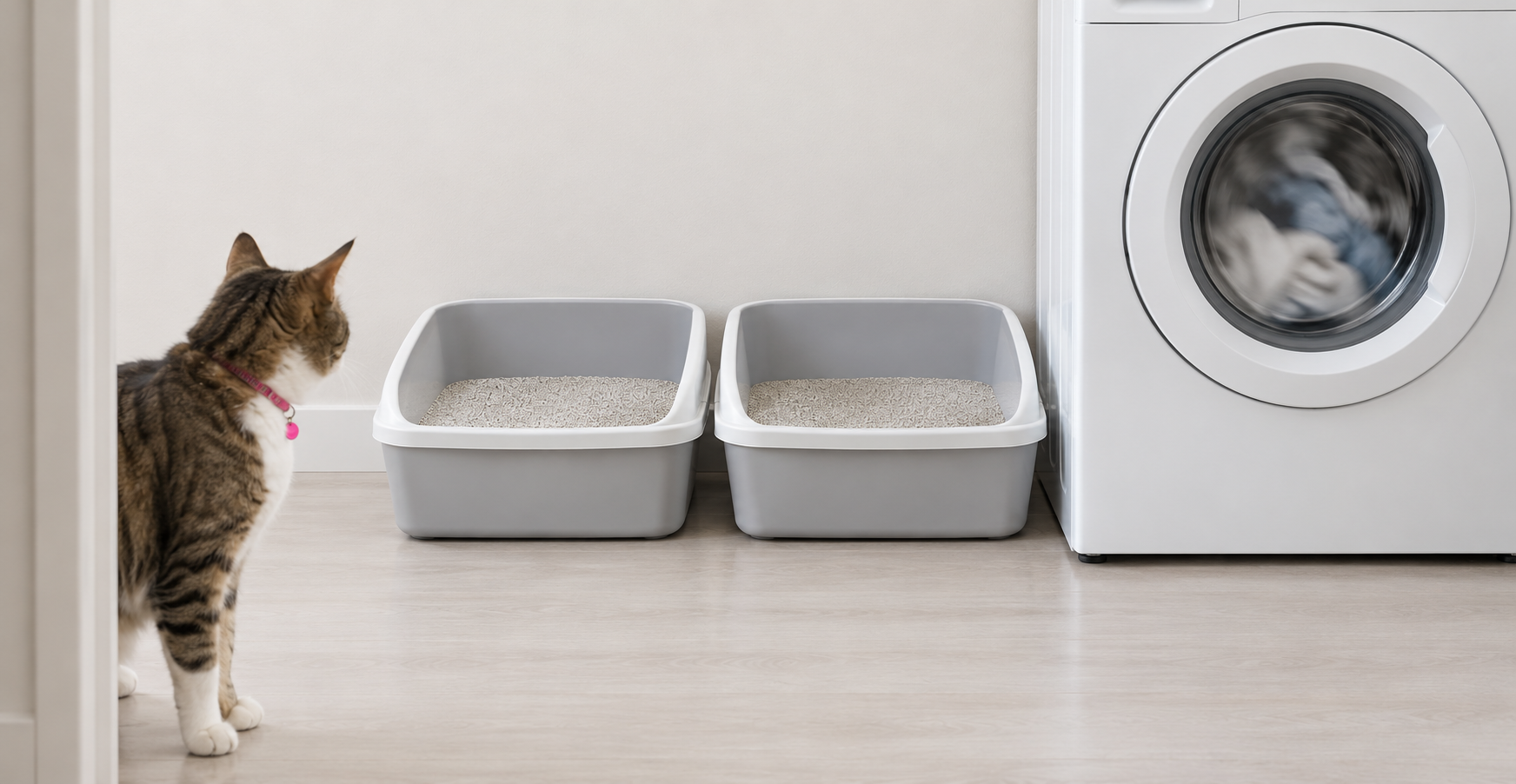
Provide one litter box per cat, plus an extra, in separate locations. Once medical needs are being addressed, look at the setup through your cat’s eyes. A hidden litter box may be convenient for the humans while being awkward to reach or easy for another cat to guard.
- Choose a box with enough room to turn around. Low sides help cats with mobility difficulties.
- Put boxes in quiet, accessible places away from food and water.
- Use unscented litter and avoid abrupt changes to a familiar setup.
- Remove deposits at least twice daily and clean boxes regularly with suitable products.
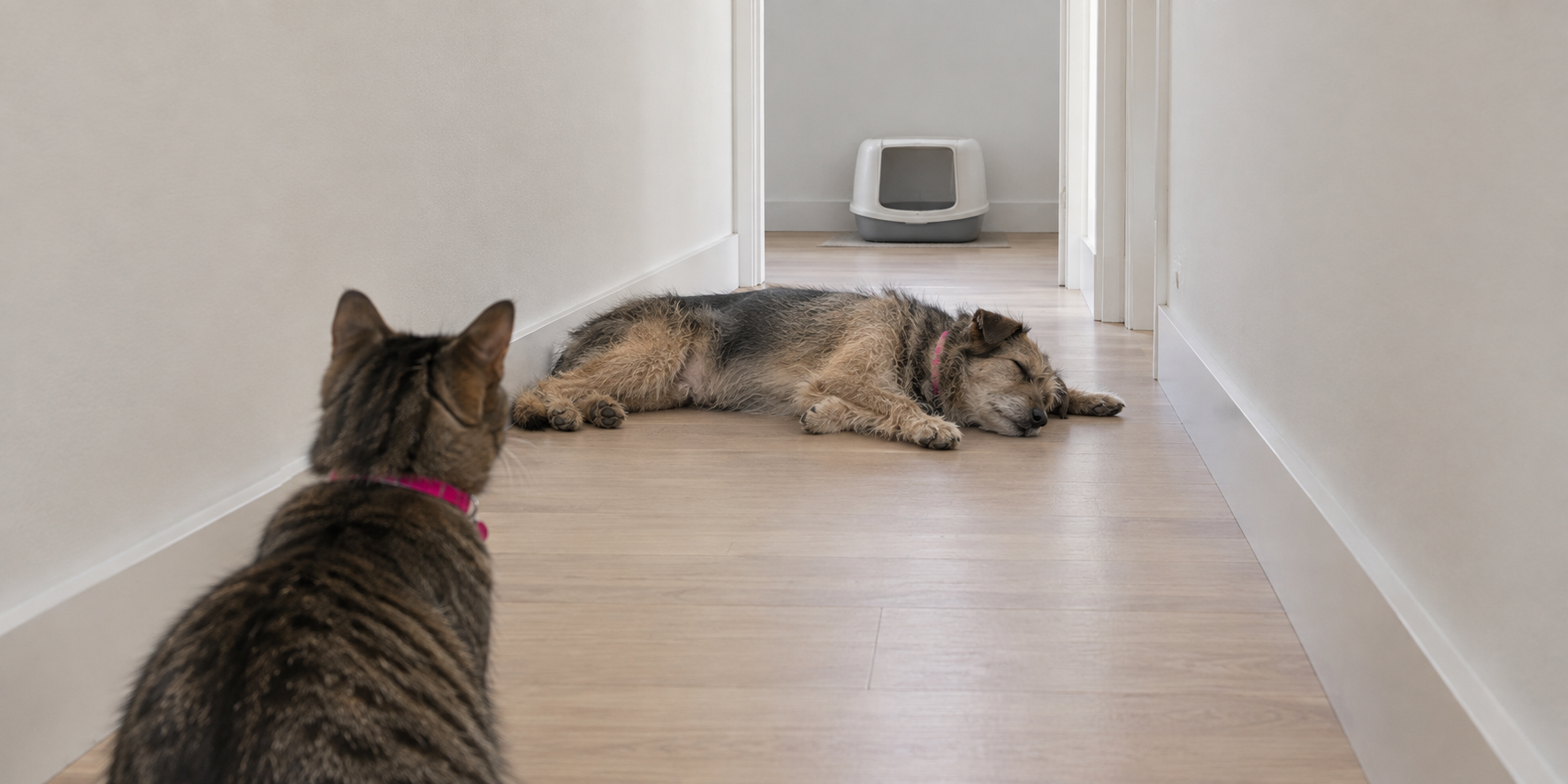
A row of boxes beside the washing machine gives you several boxes with the same noisy problem. Consider access as well as quantity: can a cat reach one without passing a dog, another cat or a busy doorway?
If you want to test a different box or litter, offer an additional option instead of removing the one they know. Keep a simple note of which they use.
Clean the spot and lower the pressure
Use a pet-safe urine cleaner according to its instructions, testing the surface first. Keep your cat away until the area is ready for them again. Covering a smell with perfume does not address why the accident happened.
Avoid punishment. Chasing, shouting or pushing a cat toward the litter box adds stress and gives you less chance to observe what is going on. Look instead for patterns: a visiting cat at the window, a new pet, a noisy appliance or difficulty climbing over a high box edge. Most of it shows up in their face and posture before it ever shows up on the floor, and the stress signals that come first are the ones worth learning to spot.
Two useful answers
My cat still uses the litter box sometimes. Does that rule out a problem?
No. Cats can use it intermittently despite discomfort or an aversion. Describe the whole pattern to the vet.
My older cat has always been clean. Why now?
A new accident is information. Pain, mobility changes and other illnesses can affect toileting; it is worth checking rather than assuming they have simply forgotten.