Why do cats sleep so much? Because a healthy adult cat is built to rest between short bursts of activity, and spends most of the day asleep or resting. Age, health and routine shape the pattern. A change from your cat’s usual pattern, especially with reduced appetite, hiding or less interest in moving and playing, deserves a call to your veterinarian.
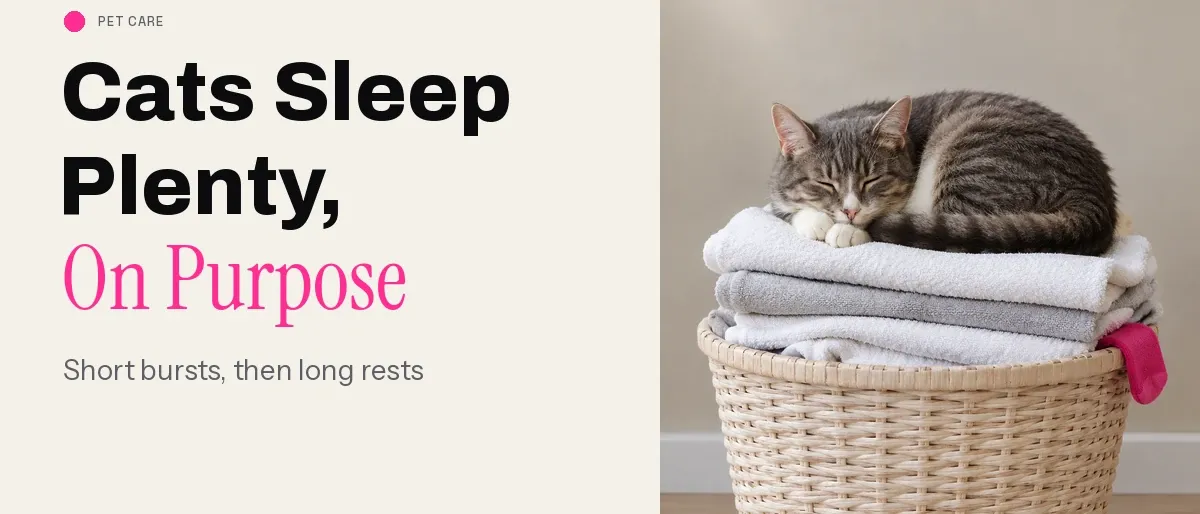
Your cat has slept on the bed, relocated to a sunbeam, then needed a recovery nap in the laundry basket. Meanwhile, you have answered three emails and are apparently the tired one.
Why do cats sleep so much during the day?
Cats are most active around dawn and dusk, so the middle of your day is their downtime.
There is a reason cats are good at this. Rest supports a lifestyle built around bursts of activity, even when today’s most demanding hunt involves a feather toy. It is the same idea that runs through our cat and dog care guides: learn what normal looks like first, and a change becomes much easier to spot.
How many hours do cats sleep?
Roughly 10 hours asleep and another 5 resting, out of a 24-hour day, going by the Merck Veterinary Manual.
Merck puts it at 40 percent of the day asleep and 22 percent resting. That is a broad guide, not a target or a test, and individual cats vary. A cat’s age, health and routine affect how their day looks.
Instead of trying to count every nap, ask what they are like when awake. Are they interested in their usual things? Moving comfortably? Eating normally? Do they still come to inspect the bag you have just put down?
Is my cat sleeping more than usual?
Judge it against your own cat’s normal, not a number: more sleep plus less interest in play is worth a vet visit within 24 hours.
A cat who has always napped through the afternoon is not news. A cat who has stopped meeting you at the door, or stopped asking for dinner, is.
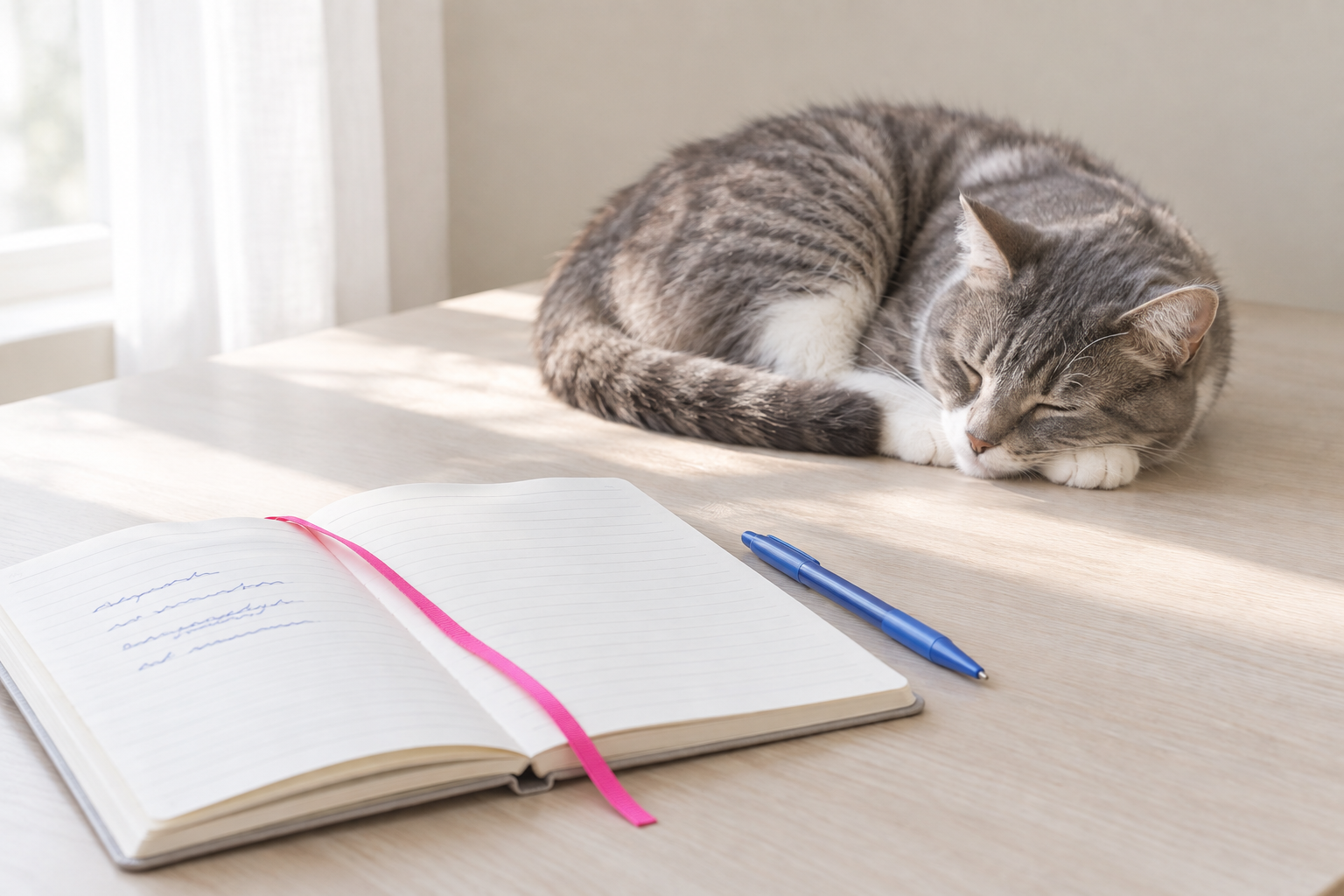
Lethargy is more than being asleep when you look over. A cat who is unusually withdrawn, weak or reluctant to move may be unwell. Seek help immediately if the lethargy is extreme, or if your cat has not eaten or drunk anything for 24 hours.
If appetite is the part that has changed, the guide to a cat who stops eating goes further.
Why does my cat sleep on me?
Warmth, comfort and familiarity are the sensible explanations, and cats may choose close contact with people they feel comfortable around.
Your lap has several attractive features, including the fact that you have just sat down with something you intended to finish.
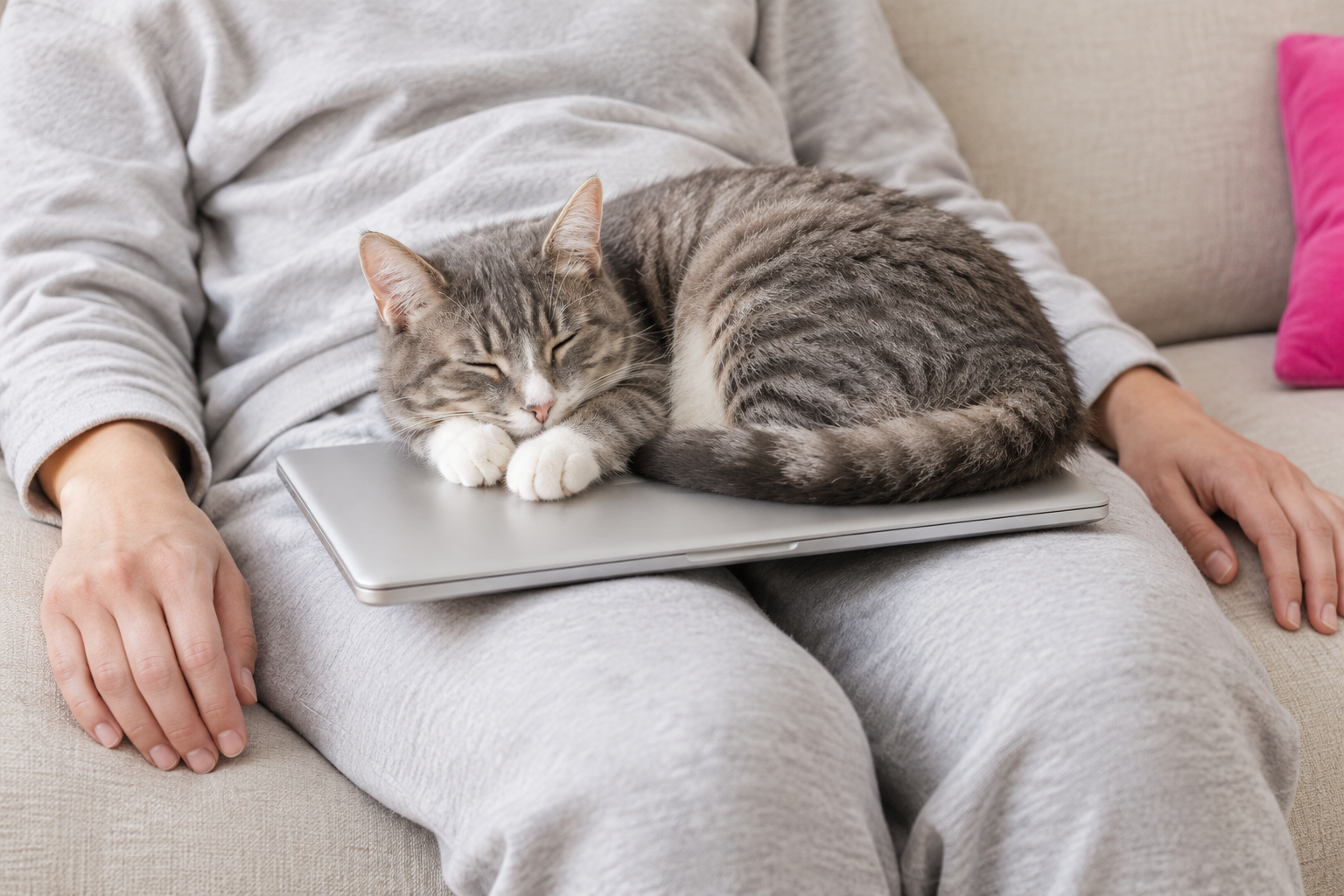
The precise location does not provide a reliable translation of their thoughts. A cat on your chest may simply find it warm and comfortable. A cat beside your feet has not necessarily taken on night security. Those stories can be lovely, but they go beyond what a sleeping position establishes. If you want a translation, look at the cat when they are awake: the ears, eyes and tail say far more than where they chose to nap.
You can enjoy the closeness without turning it into a test of love. A cat who prefers a nearby chair may simply like that chair.
How do I help my cat sleep well?
Give them more than one quiet resting place, including somewhere to hide and somewhere up high if they can reach it comfortably.
Keep sleeping spaces away from repeated disturbance. Let a sleeping cat rest rather than waking them for attention.
In a busy home, agree on one place where the cat will be left alone. That might be a bed in a quiet room or an accessible perch. The most photogenic spot in the house is not automatically the most restful.
If they sleep on you and you need to move, gently encourage them onto a nearby comfortable surface. You are allowed to have functioning legs.
Why is my cat awake at night?
Cats are naturally active around dawn and dusk, which often lines up badly with your alarm.
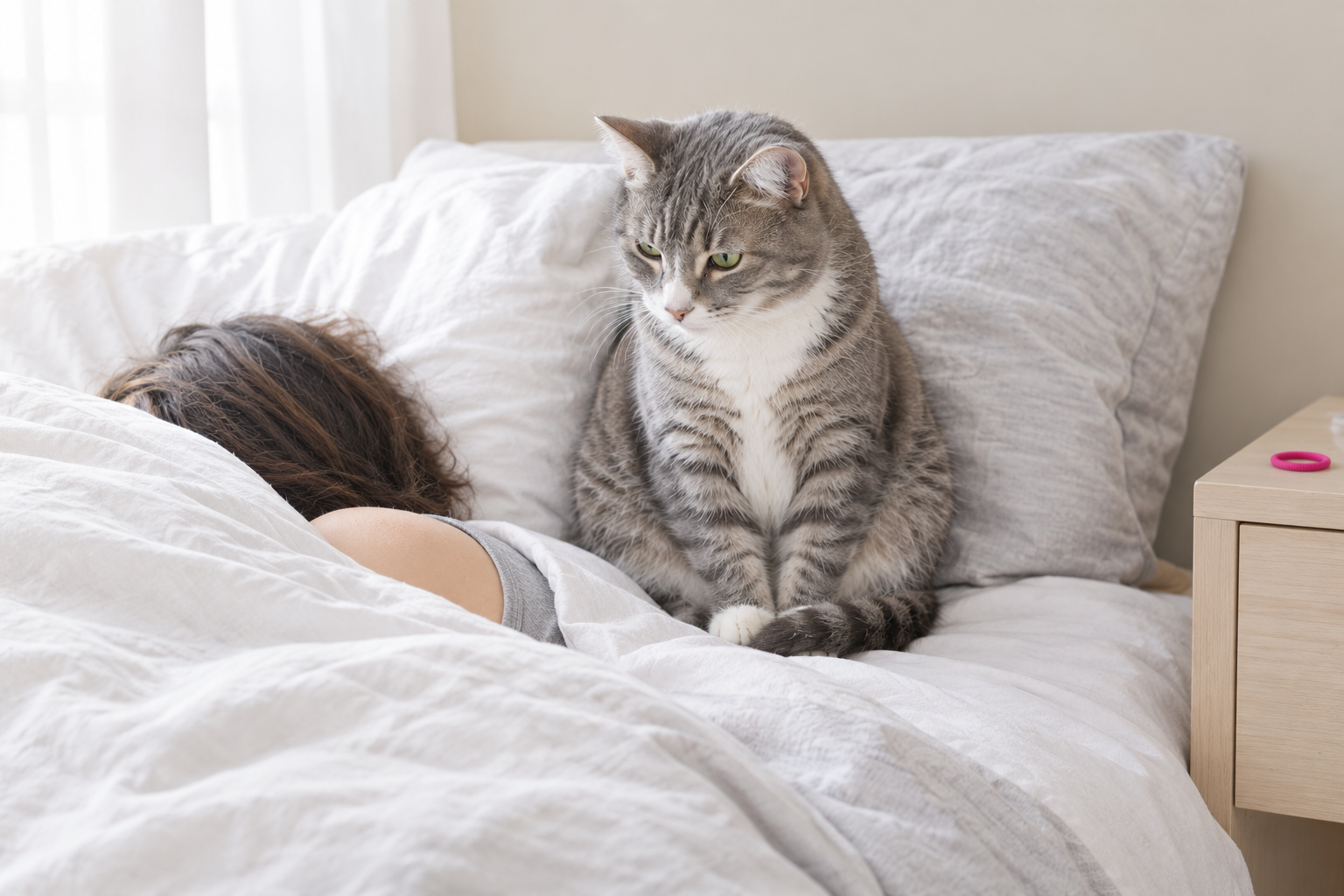
If yours wakes you regularly, consider hunger, the daily activity pattern and anything disturbing them. A sudden change in nighttime behavior, particularly in an older cat, should be discussed with the vet.
For a healthy cat, try short play sessions during the day and an evening session that fits their interest and mobility. Play mimics the hunt, so let them stalk and catch the toy, then put any string or wand toy away. Plan meals within their usual daily allowance; an automatic feeder may help if breakfast demands are the main issue.
Do not keep your cat awake all day to try to exhaust them into sleeping at night. Cats need undisturbed rest.
What should I note if my cat’s sleep changes?
The changes you actually notice, written down for a few days: missed play, staying in one place, waking repeatedly or leaving meals.
Add any change in drinking, litter box habits or movement. This gives the vet a clearer picture than “she sleeps a lot”, which may have described her since kittenhood. A diary is only useful if you can find it at the appointment, which is why pookii, the internet for pets, keeps her notes beside her photos.
Take the laundry-basket nap photo. Then let her sleep. A familiar routine is reassuring; an unfamiliar change is worth checking.
Questions about cat sleep
How many hours a day do cats normally sleep?
Cats commonly sleep for about 12 to 18 hours a day, with variation between individuals. The range is a guide rather than a target. Changes in your cat’s normal pattern and how they behave while awake are more useful than counting every nap.
Why does my cat sleep on my chest or near my head?
A cat may sleep on you because the spot offers warmth, comfort and familiar contact. Their exact position does not reliably reveal a specific emotion or protective intention. Enjoy the closeness without treating a favourite sleeping place as a test of love.
Should I keep my cat awake so they sleep at night?
Do not keep your cat awake to make them sleep at night. Cats need undisturbed rest. For a healthy cat, review daytime play and meal routines; discuss sudden night waking or other behaviour changes with your vet.
When should I worry about my cat sleeping more than usual?
Contact your vet when extra sleep comes with a change in appetite, movement, play or social behaviour. A cat who is weak, severely lethargic or otherwise seriously unwell needs urgent help. Compare their behaviour with their own normal routine.