If your cat has stopped eating or is eating noticeably less, contact your vet promptly. Do not wait for a two-day deadline. A cat who is weak, struggling to breathe, repeatedly vomiting or unable to pass urine needs urgent veterinary attention. Very young kittens and cats with existing illnesses need especially prompt advice.
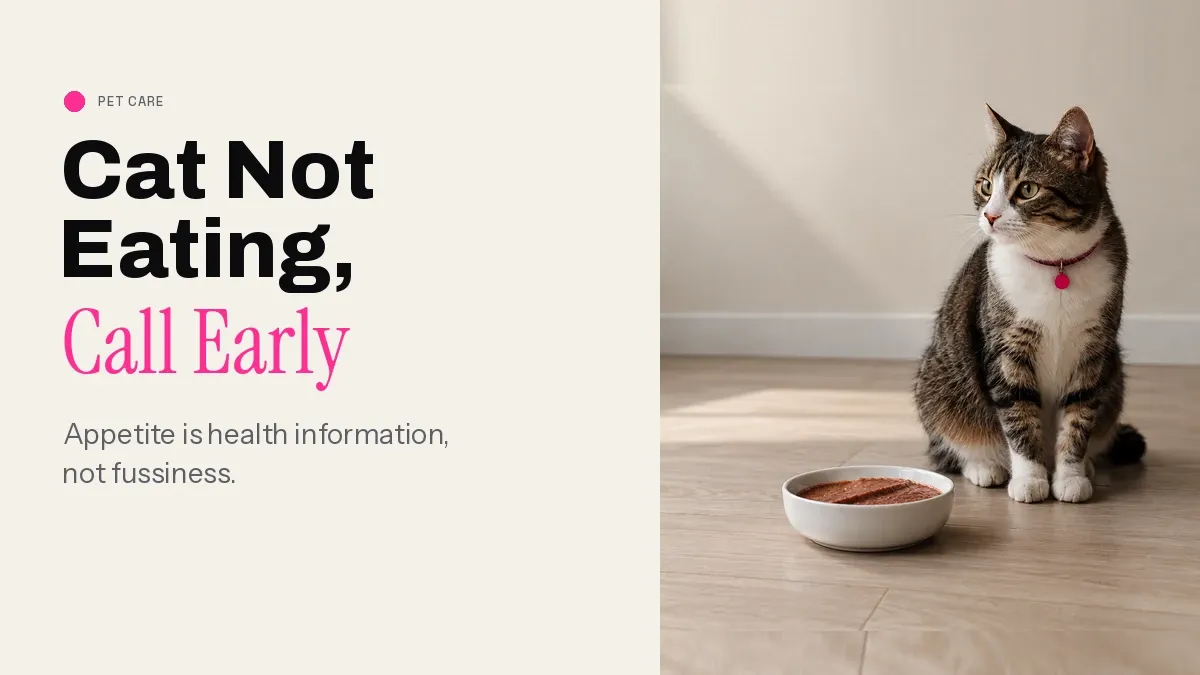
Usually, your cat hears a food pouch open from another postcode. Today, the bowl is untouched. It is tempting to call them fussy, especially if they have strong opinions about which flavour was acceptable yesterday.
But appetite is useful health information, and like the rest of your cat's routine care it is easier to judge against what is normal for them. Before opening the fifth alternative dinner, work out what has changed and call the veterinarian.
Why has my cat stopped eating
Dental pain, nausea, other illness and stress can all affect appetite. A sudden change of food, a moved bowl or tension with another pet may also make eating harder. The same empty bowl can have very different explanations, which is why appetite loss needs assessment rather than a guess.
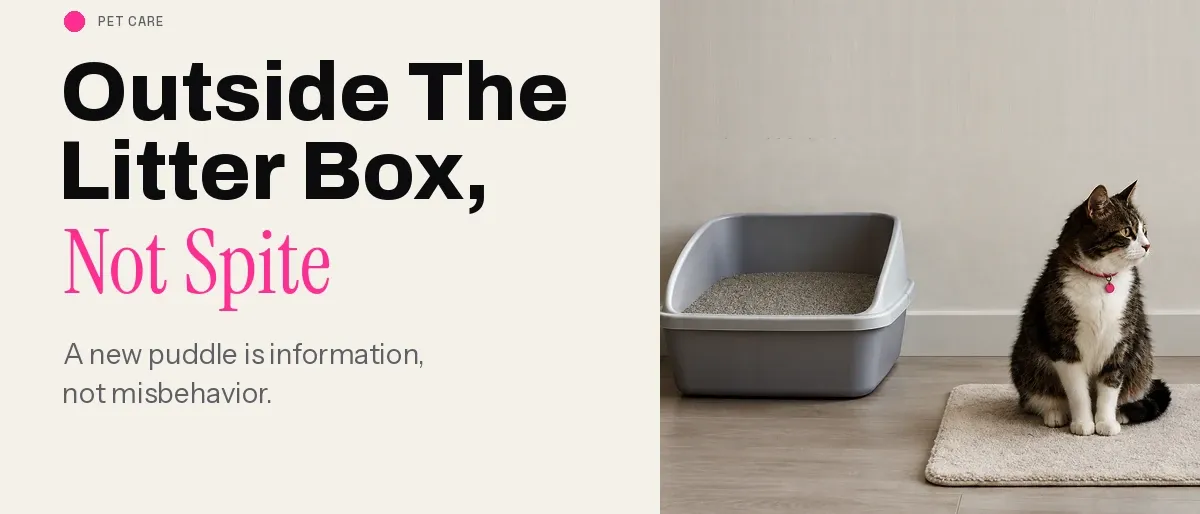
Stress rarely shows up in only one place. If the litter box has become unreliable at the same time, a cat peeing outside it belongs on the same call rather than a separate one.
Notice the difference between a cat who approaches the bowl but backs away, one who struggles to chew and one who shows no interest at all. Tell the vet what you see; those observations are more useful than deciding at home that it must be a tooth or a tummy problem.

An empty bowl is not proof that the right cat ate, either. In a household with several pets, someone else may have enjoyed a second breakfast. Watch individual meals if you can do so without upsetting them.
How long can a cat go without food
Cornell’s Feline Health Center warns that a mature cat’s health can be seriously affected by as little as 24 hours without eating. That is a reason to seek help early, not a safe period to wait out.
Cats that do not eat enough can develop hepatic lipidosis, a serious build-up of fat in the liver. It often occurs alongside an underlying problem, and overweight cats are particularly vulnerable. Being well padded does not give a cat a useful reserve for going without meals.
What can I do while waiting for veterinary advice
Offer a small amount of their familiar food in a quiet place, with other pets out of the way. Make fresh water available. If your vet advises tempting them to eat, slightly warming familiar wet food may help its aroma; check that it is not hot.
Keep the experience calm. Repeatedly putting bowls under their nose or changing every part of dinner can add pressure. A peaceful spot and a familiar meal are a more sensible starting point than a kitchen full of new products.
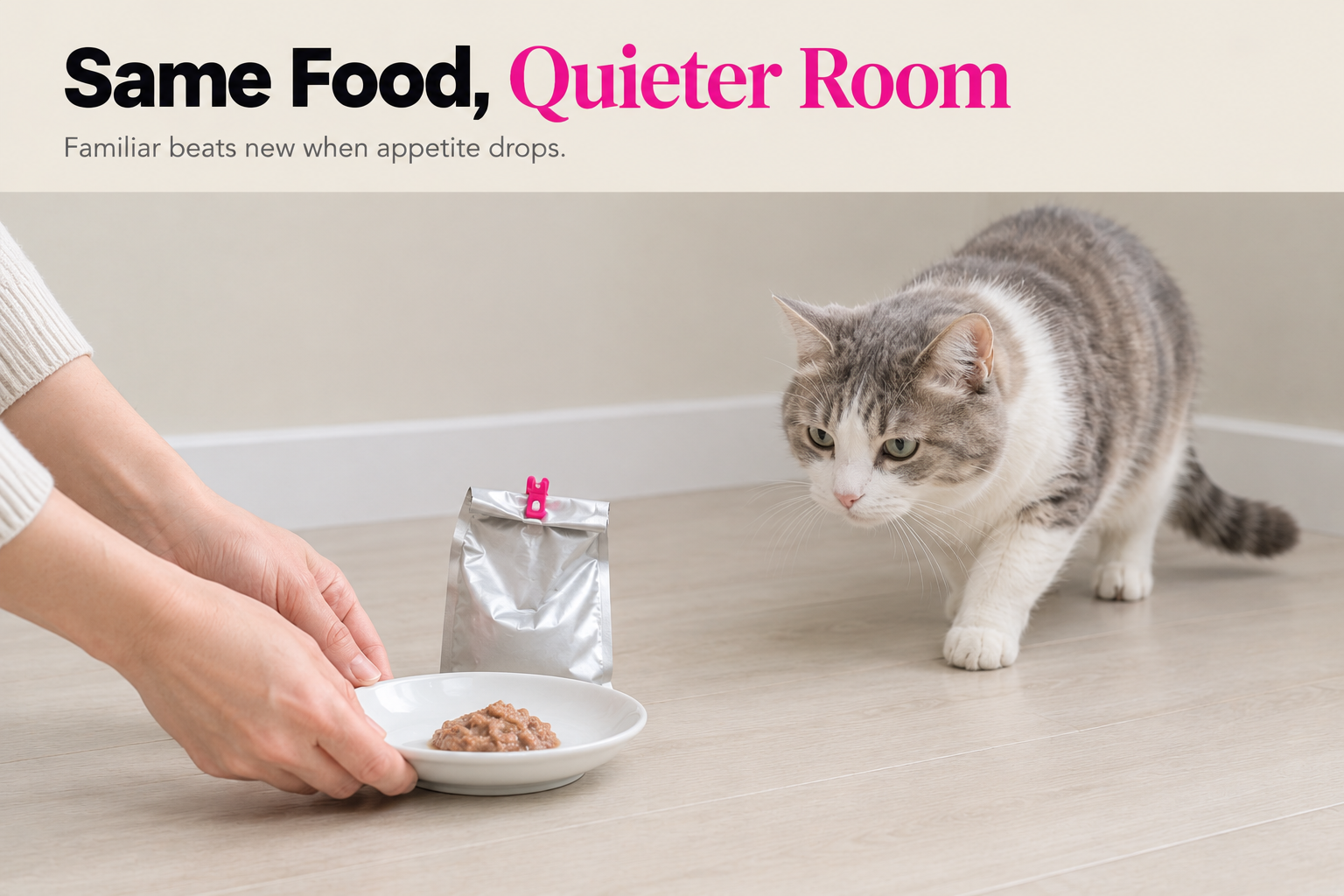
Do not force food into their mouth or syringe-feed them on your own initiative. The ISFM guidelines advise against force-feeding because it can worsen food aversion. A vet can decide whether pain relief, nausea treatment, nutritional support or other care is needed.
If your cat has a prescribed diet, takes medication or has diabetes, tell the clinic. Ask what to do about their next meal and medication rather than improvising.
Make the vet call easier
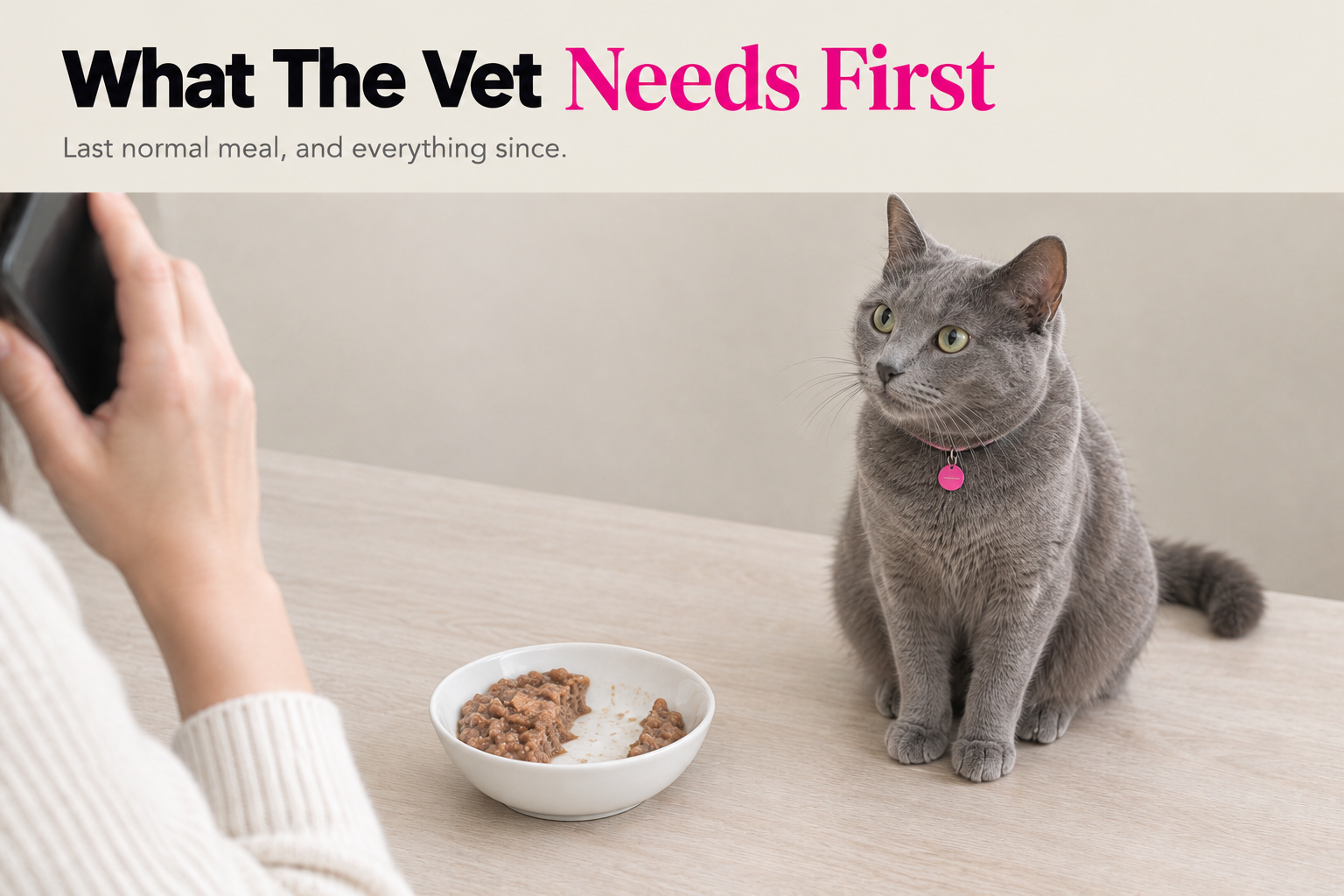
Have these details ready:
- When they last ate a normal amount, and roughly what they have eaten since.
- Whether they are drinking, peeing and passing poo as usual.
- Any vomiting, hiding, unusual tiredness, drooling or apparent mouth pain.
- Recent food changes, new pets, visitors, moves or medication changes.
- Any possibility of access to a plant, medicine, string or another hazard.
You do not need a perfect spreadsheet. “She ate half of breakfast yesterday and nothing since” is useful. A short video of unusual behaviour may help, provided taking it does not delay care.
The questions everyone asks
What if my cat will eat treats?
Tell the vet. A few treats do not necessarily add up to adequate nutrition, and selective eating does not rule out discomfort.
Could it be stress?
Yes, but stress and physical illness can overlap. A recent change at home is a clue to share, not a reason to dismiss the appetite change.
Should I keep trying foods until something works?
Ask the vet for a feeding plan. Getting a little food in can be encouraging, but it does not explain why the problem started.