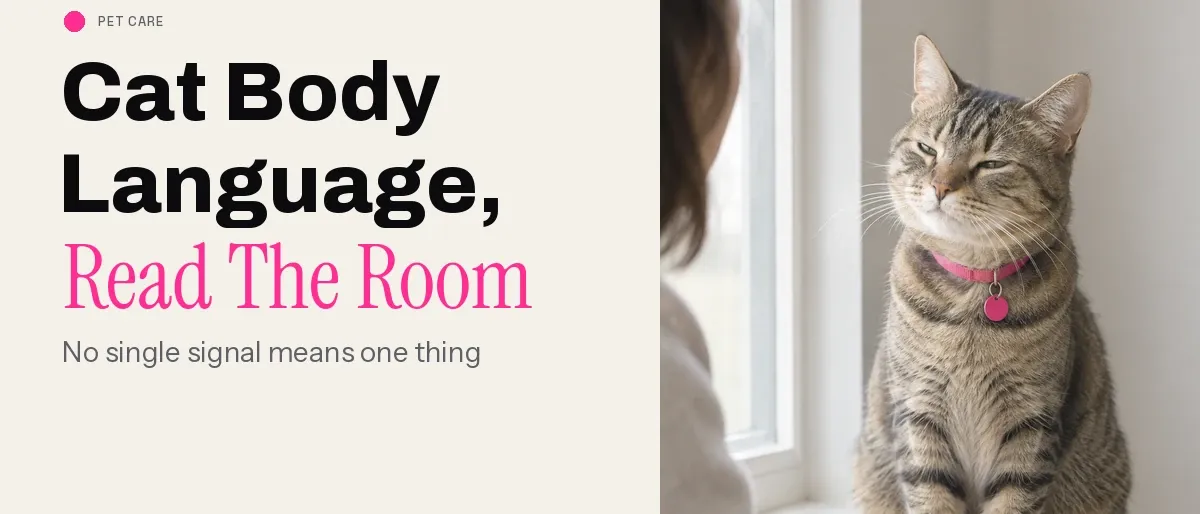
To understand cat body language, read the whole cat and the situation. Eyes, ears, tail, posture and movement give clues, but no single feature translates neatly into one emotion. A new or painful eye change belongs with a veterinarian, not on an emotion chart.
One minute your cat is leaning into your hand. The next, the tail starts flicking and your hand has become an unpopular guest.
The useful question is what changed between those two moments. Learning to notice the smaller signals gives your cat more choice and your fingers a better afternoon. The rest of our cat care guides deal with the health side. This one is about the reading.
Where does cat body language actually start?
With the room, not the face.
Before interpreting a face, look around. Is a toy moving? Has a dog entered? Did a loud noise just happen? Is your cat cornered, resting or walking toward you?
A relaxed body with a willing approach is different from a stiff crouch and flattened ears. Give a tense or retreating cat space and a clear route away. Let a comfortable cat decide whether to come closer.
The same pause can be useful with a familiar pet and a cat you have just met. You do not have to test how much touching they will tolerate.
What do big pupils mean in cats?
Pupils change size to control the light entering the eye.
They can also change with arousal, so wide pupils alone do not tell you whether a cat is playful, frightened or simply in a dim room. Check the lighting and the rest of their behavior.
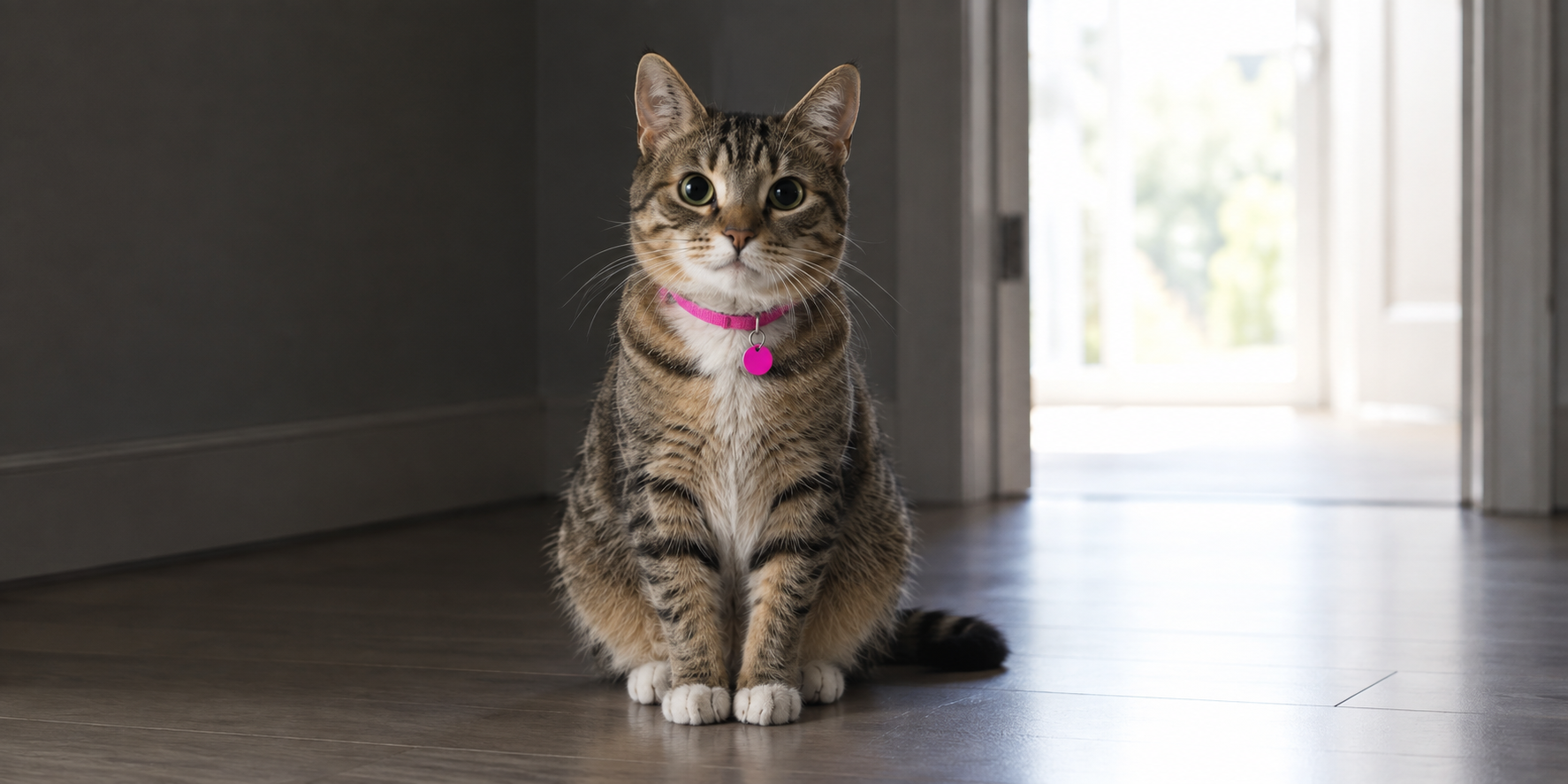
Compare both eyes. A sudden difference in pupil size, especially with squinting or other changes, needs urgent veterinary advice. That is different from both pupils widening as the room gets darker.
Your cat has excellent eyes. They have not installed a mood-status light in them.
What does it mean when a cat slow blinks?
Research supports a role in positive communication.
A 2020 study by Humphrey and colleagues tested slow-blink interactions. Cats narrowed their eyes more in response to an owner's slow blink, and in a separate experiment were more likely to approach an experimenter after a slow blink than after a neutral expression.
You can try sitting quietly, softening your gaze and slowly closing and reopening your eyes. Then look slightly away and let your cat choose what happens next. Avoid a prolonged stare or leaning into their face.
It is a gentle invitation, not proof that every cat wants a cuddle. A cat who stays where they are has not failed your friendship test.
Does showing the belly mean a cat wants a belly rub?
Rolling onto their back can happen when a cat is comfortable, but it does not mean they want their belly touched.
Notice what they usually enjoy and pause if they move away, become tense or turn their ears back.
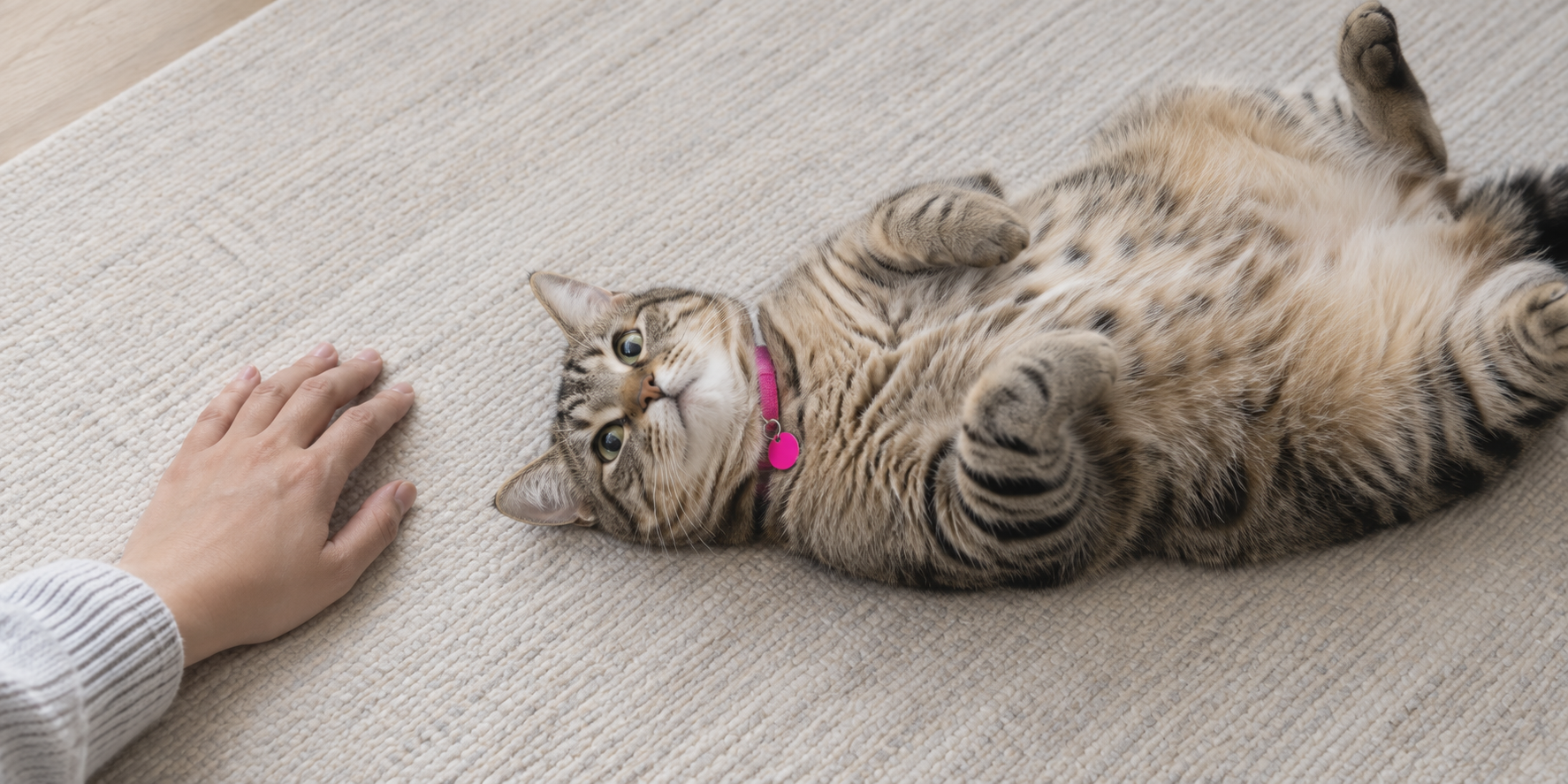
Try a short interaction rather than a long, uninterrupted session. Stop your hand and see whether they choose to re-engage. If they leave, let them. Your cat can love you and still want you to stop touching them.
For play, use an appropriate toy instead of fingers or toes. Wand toys let a cat stalk and pounce while keeping your hands out of the game; supervise string toys and put them away afterward.
Can a cat purr when they are in pain?
Yes. Cats can also purr when stressed or in pain.
A relaxed cat purring beside you may well be enjoying the moment. Appetite, movement, posture and changes from their normal behavior still matter, and a cat who stops eating is its own signal.
That distinction is especially useful when a cat is unusually quiet. Being still is not the same thing as being comfortable.
When does an eye need medical attention?
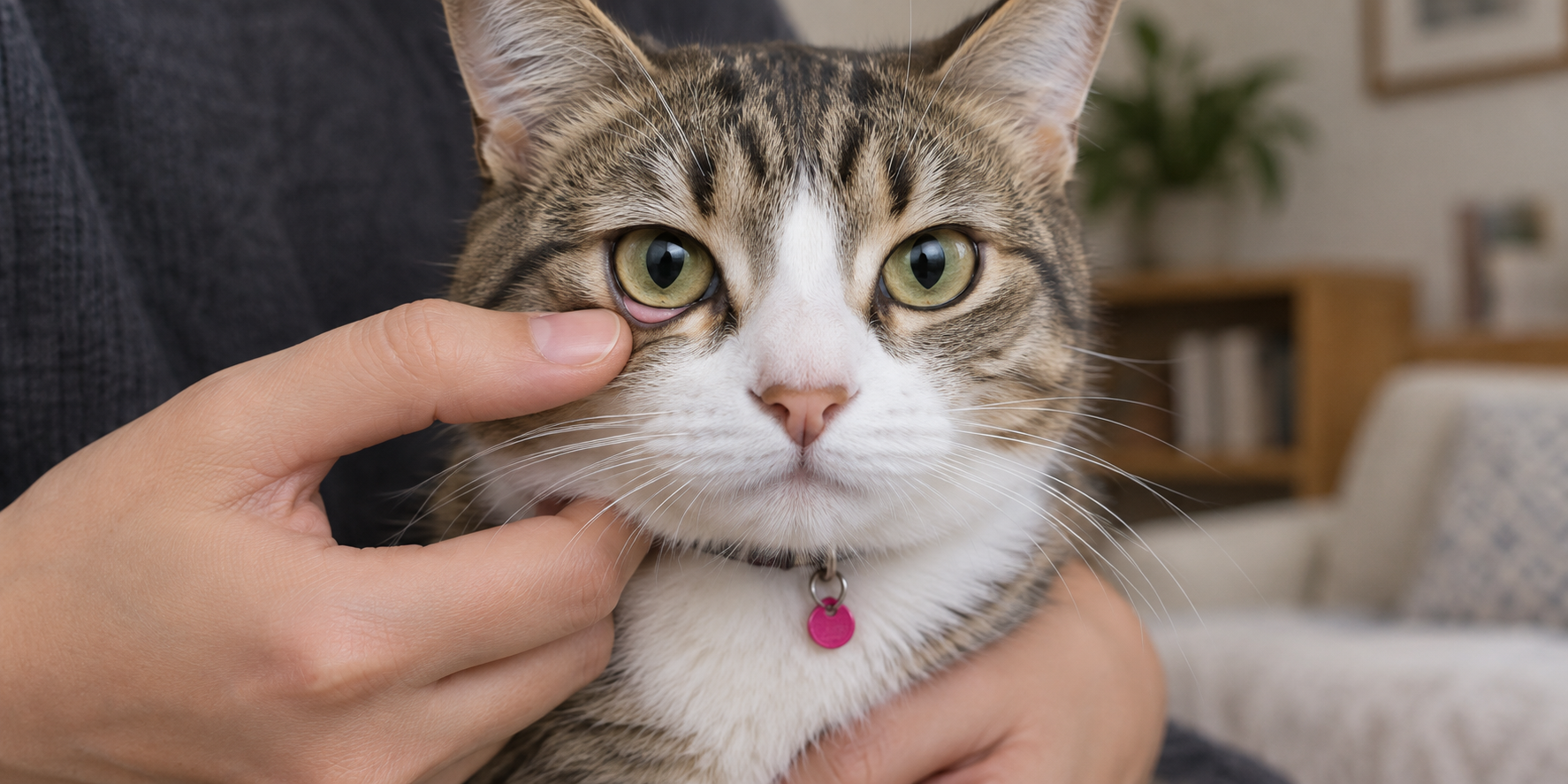
Contact your veterinarian promptly about a new eye problem.
Merck's guidance for cat owners names squinting, a protruding third eyelid and abnormally red eyes, along with any other change to the eye. Pain, an eye held shut, cloudiness, discharge or a change in pupil size needs assessment; painful or sudden changes need urgent advice. Do not use leftover or human eye drops unless your vet directs you.
The most useful body-language skill is knowing when to pause. Sometimes your cat wants play. Sometimes they want room. Sometimes they need help. Looking at the whole picture gives you a much better chance of getting it right.
The whole picture is easier to hold when something is keeping it. Every cat on pookii, the internet for pets, has somewhere to put that.
The questions everyone asks
How do I know when my cat wants space?
A cat who becomes tense, flattens their ears or moves away may want the interaction to stop. Pause touching, give them a clear route away and let them choose whether to return. Read the whole body and situation together.
What does it mean when my cat slow blinks at me?
A cat's slow blink can be part of positive communication with people. Research supports that interpretation, but a slow blink is not a guarantee that the cat wants touching. Soften your gaze, blink slowly and let your cat choose whether to approach.
Why are my cat's pupils so big?
A cat's pupils can widen in dim light or with arousal, including excitement or fear. Check the lighting and the rest of their body language. A sudden difference between the pupils, squinting or a painful eye needs urgent veterinary advice.
Does purring always mean my cat is happy?
Purring does not always mean a cat is happy. Cats can also purr when stressed or in pain. Look at their posture, appetite, movement and usual behavior, and contact your veterinarian about concerning changes rather than relying on the purr alone.