A pet vaccination schedule runs on three clocks in the United States, and almost everybody runs them as one.
The first is puppy vaccinations, a course that finishes at sixteen weeks or later. The second is the core booster, which AAHA sets at a three year interval once that course is done. The third is annual, and it is a shorter list than people assume.
The appointment is yearly because the clinic runs on a year and it is easier to see everybody at once. That is a scheduling decision rather than a clinical one, and the difference is the whole of this page. Cats run on a similar set of clocks, covered further down.
Vaccinations are one of several things running on their own clock in a pet’s life, and the rest of those clocks sit on the pet care page. This one is here because it has more dates attached to it than any of the others.
Which vaccines are on the dog schedule?
Four viruses in one shot, plus leptospirosis and rabies, and in the US all three of those are core.
The combination shot is written DAPP or DHPP on your paperwork. It covers distemper, adenovirus, parvovirus and parainfluenza. If you have seen "hepatitis" on a chart, that is adenovirus under an older name.
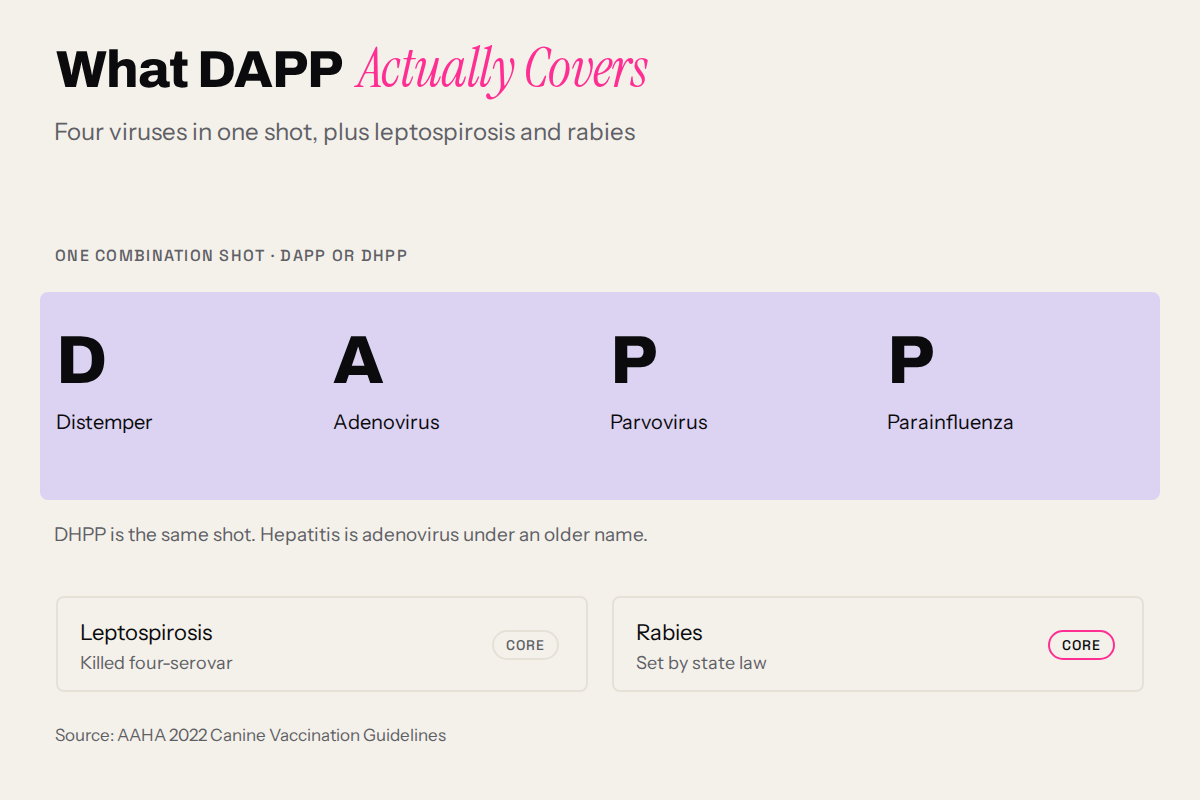
AAHA's 2022 canine guidelines put three things in the core list: that combination, the killed four-serovar leptospirosis vaccine, and rabies. Everything else is noncore and depends on where the dog lives and what it does: Bordetella, Lyme, canine influenza, and in some states a rattlesnake toxoid.
Which of those a particular dog needs comes down to its life rather than its breed, and which shots your dog needs at each age is set out in full on its own page.
Rabies is the one that behaves differently from all of them. AAHA gives its timing as "as required by law", which means your state or local government sets the age and the interval rather than your veterinarian's judgment. It is the only vaccine on the list that is a legal obligation, and requirements differ by state, so the only reliable answer is your own clinic's.
Who sets those rules, how the 1-year and 3-year versions differ, and what a lapsed certificate means after an exposure are all covered in the rabies shot and its dates.
Bordetella is the one people call kennel cough. It often goes up the nose rather than under the skin, boarding facilities and day care usually ask for it rather than it being given by default, and it runs on its own annual clock regardless of what the rest are doing. Because the request usually comes from a kennel with a deadline, it helps to know how far ahead to book it before the email arrives.
The useful thing to carry away is that "vaccination" covers several products on several intervals. Asking which component is due is a better question than asking whether the dog is up to date.
Are dog vaccinations really needed every year?
Not all of them, and the answer is three different intervals rather than one.
This is the question people are actually typing, and it has a clean answer for once. From the same AAHA guidelines:
| Component | Adult interval |
|---|---|
| DAPP core combination | every 3 years |
| Leptospirosis, killed 4-serovar | annually |
| Rabies | as required by law, commonly 1 or 3 years by state |
| Bordetella, Lyme, influenza, if given at all | annually |
So a dog seen every year is not receiving everything every year. The visit is annual. The contents are not, and in most years the core combination is not in the syringe at all.
The WSAVA vaccination guidelines make the same distinction globally: core vaccines, which every dog should have wherever it lives, and noncore, which depend on circumstances. For the core viral components, duration of immunity is measured in years rather than months.
The second half is the part nobody says out loud. The annual appointment is also a health check, and for a lot of dogs it is the only time anybody weighs them, looks in their mouth and feels their abdomen. That is worth the trip on its own, whatever goes in the syringe.
If you want to know what your dog is actually getting, ask the clinic which components were given and which are due next year. They have it on the record. Almost nobody asks.
What is the puppy vaccination schedule, exactly?
At least three doses between six and sixteen weeks, two to four weeks apart, and the first one often happens before you collect them.
AAHA's wording is "at least 3 doses of a combination vaccine between 6 and 16 weeks, 2 to 4 weeks apart", and its shelter protocol keeps boosting until 18 to 20 weeks of age.
That matters more than it sounds, because a two dose course is the pattern most of the internet describes and it is not the US one. The dose your breeder or shelter gave is usually the first of three or four, not the first of two.
Leptospirosis and rabies slot into the same visits on their own terms, lepto with a booster inside the first year and then annually, rabies when your state says.
The wait before a puppy's feet touch shared ground runs from the last dose in the series, not the second. That is the single most common error in US puppy advice, and the wait after the last dose has a page to itself, covering what to do with that time while the socialization window is closing.
What is the cat vaccination schedule?
Different diseases, a similar shape, and the belief that an indoor cat does not need them is the common mistake.
The AAHA and AAFP feline guidelines put FVRCP in the core list, covering feline herpesvirus, calicivirus and panleukopenia, alongside rabies. Feline leukemia virus is core for kittens and becomes noncore after one year of age, which is a distinction that surprises people who were told it was optional from the start.
The kitten course starts young and runs long: doses every three to four weeks with the final one at 16 to 20 weeks, which is later than the twelve week finish line older advice describes. Adult FVRCP is every three years for the injected form and annually for the intranasal one. Rabies is commonly every three years, again subject to state law.
Indoor cats still need them. Panleukopenia in particular does not need another cat present to reach yours, because it travels on clothing and hands the same way parvovirus does.. Lifestyle changes which vaccines, not whether.
Ask your veterinarian which of these your cat is due for, and keep the dates with the rest of their record. The full cat picture, including the six month kitten booster most owners never hear about, is in which vaccines cats need, indoors or out.
What happens if a booster is missed?
It depends how late, and the clinic decides, but a long enough gap means restarting the series rather than topping it up.
This is the expensive mistake and it is nearly always administrative rather than a decision.
A reminder went to an old address. The clinic was bought and rebranded. You moved. Nobody chose to skip it.
Where the lapse is short, the usual handling is a single dose and carry on. Where it is long, the initial series starts again, which is several appointments instead of one and a puppy-style wait in the middle for an adult dog.
There is a second cost that is easier to miss. Boarding facilities, day care, grooming and a lot of insurance policies require a current vaccination record. A lapsed one can mean a refused booking the week you needed it, or a claim questioned at the worst possible moment. Rabies is the sharpest version of that, because a lapsed rabies vaccination can have legal consequences after a bite that a lapsed Bordetella never will.
Where do the vaccination dates actually live?
On one clinic's system, which is not yours, and which does not follow the animal when either of you moves.
This is the reason a page about vaccinations ends up being a page about records.

The reminder text is one clinic reminding you about one animal out of their database. It is not the schedule. Change veterinarian, move state, or have the clinic bought out, and that reminder stops arriving while the intervals keep running.
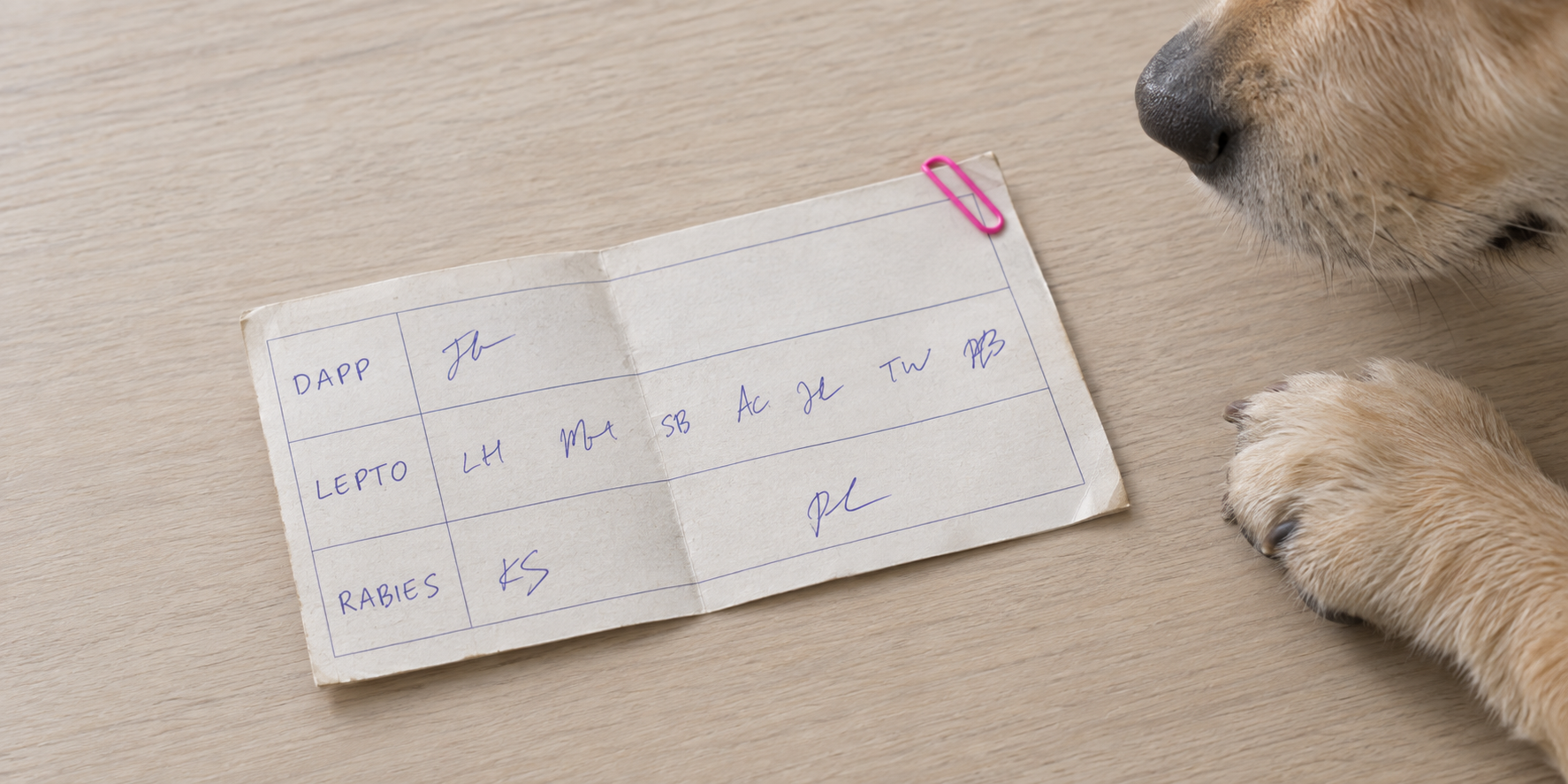
The card in the drawer is the backup, and the card in the drawer has been rained on, put somewhere safe, or handed to a boarding facility and not returned.
So the useful habit is thirty seconds in the parking lot after every appointment. Which product, which date, what is due next and when. Written somewhere that is not the clinic's database and not your memory.
That is the thinking behind giving your pet their own page on pookii, a record that moves with them, so the dates you are told once and expected to carry for a decade outlive the clinic that gave them to you.
What else do people ask about the vaccination schedule?
Is the annual booster the same every year?
No. AAHA puts the core DAPP combination on a three year interval, leptospirosis annually and rabies on whatever your state requires, so a yearly appointment usually contains different things in different years. Ask the clinic which components were given and which are due next.
Is rabies really required, or is it just recommended?
Required, and it is the only one on the list where that is true. AAHA lists rabies as core and gives its timing as required by law. The age and the interval are set by your state rather than by your veterinarian, so ask your own clinic rather than reading across from somewhere else.
Can a puppy go out after the first vaccination?
Not onto shared ground. Carrying is fine and is actively recommended, and your own secure yard is usually fine if no unvaccinated dog has been in it. The wait runs from the final dose in the series, not the first and not the second.
How long can you leave between doses?
Short gaps are usually absorbed with a single dose. Long ones mean restarting the series. There is no national cutoff, because it depends on the product used and on your clinic's protocol, so call and ask rather than guessing.
Do indoor cats need vaccinations?
Usually yes. Panleukopenia and several other core feline diseases travel on clothing and hands rather than needing another cat present, so an indoor cat is exposed by you coming home. Lifestyle changes which vaccines, not whether they are needed, and the cat vaccine guide goes through which ones.
How much do puppy vaccinations cost?
It varies by clinic and by region, and the figure you want is the one your own clinic quotes rather than an average. Ask whether the price covers the full initial series or a single dose, because the two are quoted differently and that is where people get caught out.
What if I do not know when the last vaccination was?
Call the clinic that gave it, because the record sits on their system whether or not you have the card. If the animal has moved between clinics and nobody has the full history, your veterinarian will usually treat the series as lapsed and restart it, which is the safe assumption rather than a punishment.