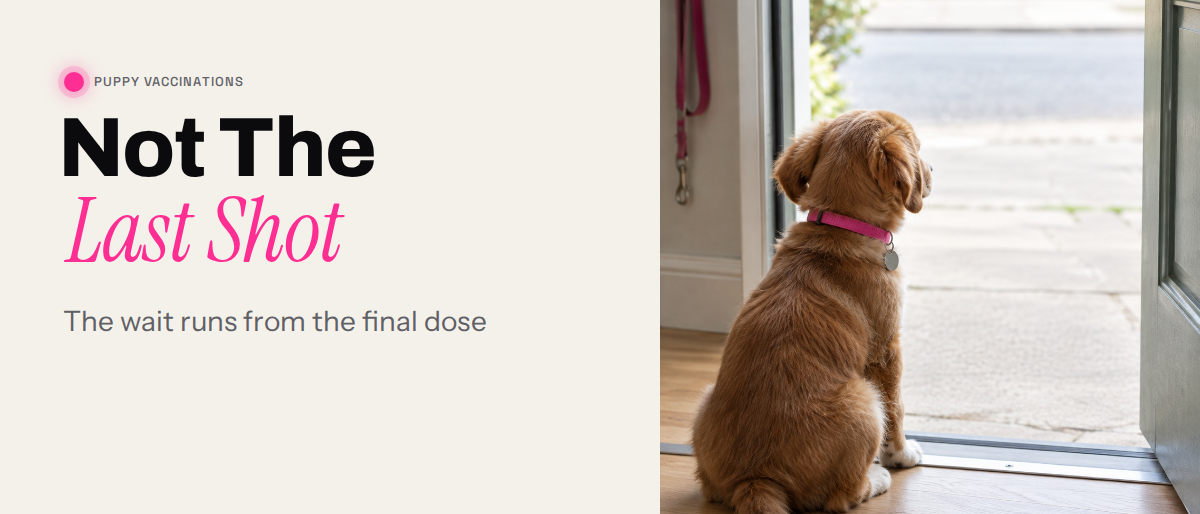
How long after 2nd puppy vaccination can they go out? In the United States, usually not yet, and the reason catches people out: the puppy second vaccination is rarely the last one.
AAHA's canine vaccination guidelines call for at least three doses of a combination vaccine between 6 and 16 weeks, given 2 to 4 weeks apart. The date you want is measured from the final dose, not the second, and on that schedule the second dose sits in the middle of the course rather than at the end of it.
Your veterinarian sets that date. Ask for it out loud, and write it down before you leave the building, along with which dose number you just had.
That is the short answer. If it is all you came for, you can go.
The longer answer matters because the countdown is usually to the wrong thing. The date your puppy can walk on a sidewalk and the date they should start meeting the world are two different dates sharing one calendar.
The rest of the course, and rabies, sit on the full vaccination timetable.
How long after 2nd puppy vaccination can they go out, in practice?
Not from that dose. The wait runs from the last shot in the series, and on the US schedule that is at least one visit later. The usual guidance is about two weeks after that final dose, so a puppy whose last shot is at 16 weeks is ready for shared ground at around 18 weeks, going by PetMD’s veterinarian-reviewed guide. Your own veterinarian’s date overrides it.
The combination shot is written DAPP or DHPP on your paperwork. It covers distemper, adenovirus, parvovirus and parainfluenza. AAHA's wording is "at least 3 doses of a combination vaccine between 6 and 16 weeks, 2 to 4 weeks apart", and its shelter protocol keeps boosting until 18 to 20 weeks of age.
Read that against what owners expect. The first dose often happens with the breeder or the shelter before you collect the puppy, a second lands a few weeks later, and then there is at least one more. That last one is what the wait is measured from. It is also where the adult schedule takes over, and the boosters that follow the puppy series run on intervals of their own.
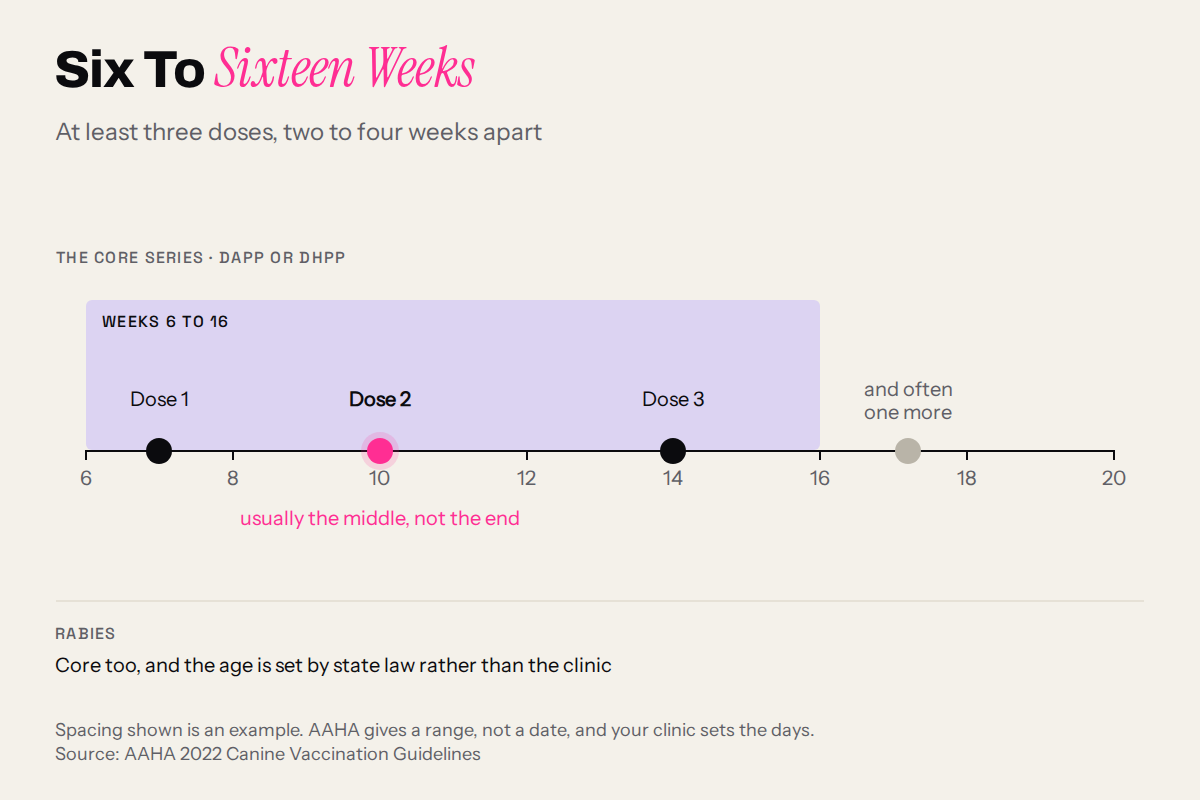
Rabies is the odd one out. AAHA lists it as core and gives its timing as "as required by law", so your state sets the age rather than your veterinarian's judgment. It is the one shot that is a legal obligation rather than a medical recommendation, and requirements differ by state.
The first dose is given at 3 months or older and counts as protective 28 days later, so rabies keeps its own clock, separate from the wait on this page.
Why did your veterinarian say something different to your friend's?
Different vaccine brands, different local disease pressure, and above all a different date for the final dose.
Some products are licensed to complete the series earlier than others, and a practice will stretch or shorten the wait depending on what is circulating locally. One that has treated two parvovirus cases this month will be more cautious than one that has not, and it is right to be.
So when somebody in a Facebook group says with total confidence that it is one week, they are not lying. They are telling you what their veterinarian said, about their puppy, on their vaccine, at their point in the series. None of that is information about yours.
Walking puppy after 2nd vaccination is the search everyone types. The question that gets a usable answer is which date, counting from which dose.
When should puppy socialization actually start?
Weeks before the sidewalk date, because the window that shapes the adult dog closes while you are still counting.
Owners treat the go-out date as the day socialization begins. It is not. It is the day sidewalk walking begins, which is different.
The AVSAB position statement puts the critical period in the first three months of life, and says puppies can start classes as early as 7 to 8 weeks, given one set of vaccines at least 7 days beforehand and a first deworming. Puppy classes often ask for Bordetella too, and the nose-drop version can start early, at 3 to 4 weeks.
Now read that against the schedule above. The series runs to 16 weeks and beyond, so by the time a US puppy has finished it, the window AVSAB describes has closed.
AVSAB does not hedge about which risk is larger. Its position is that socialization before full vaccination should be the standard of care, and that behavioral problems, not infectious disease, are the number one cause of death in dogs under three.
Some veterinarians push back on that emphasis, particularly where parvo is active, and they are not being difficult. Infectious disease risk is theirs to manage and they are the ones who see it.
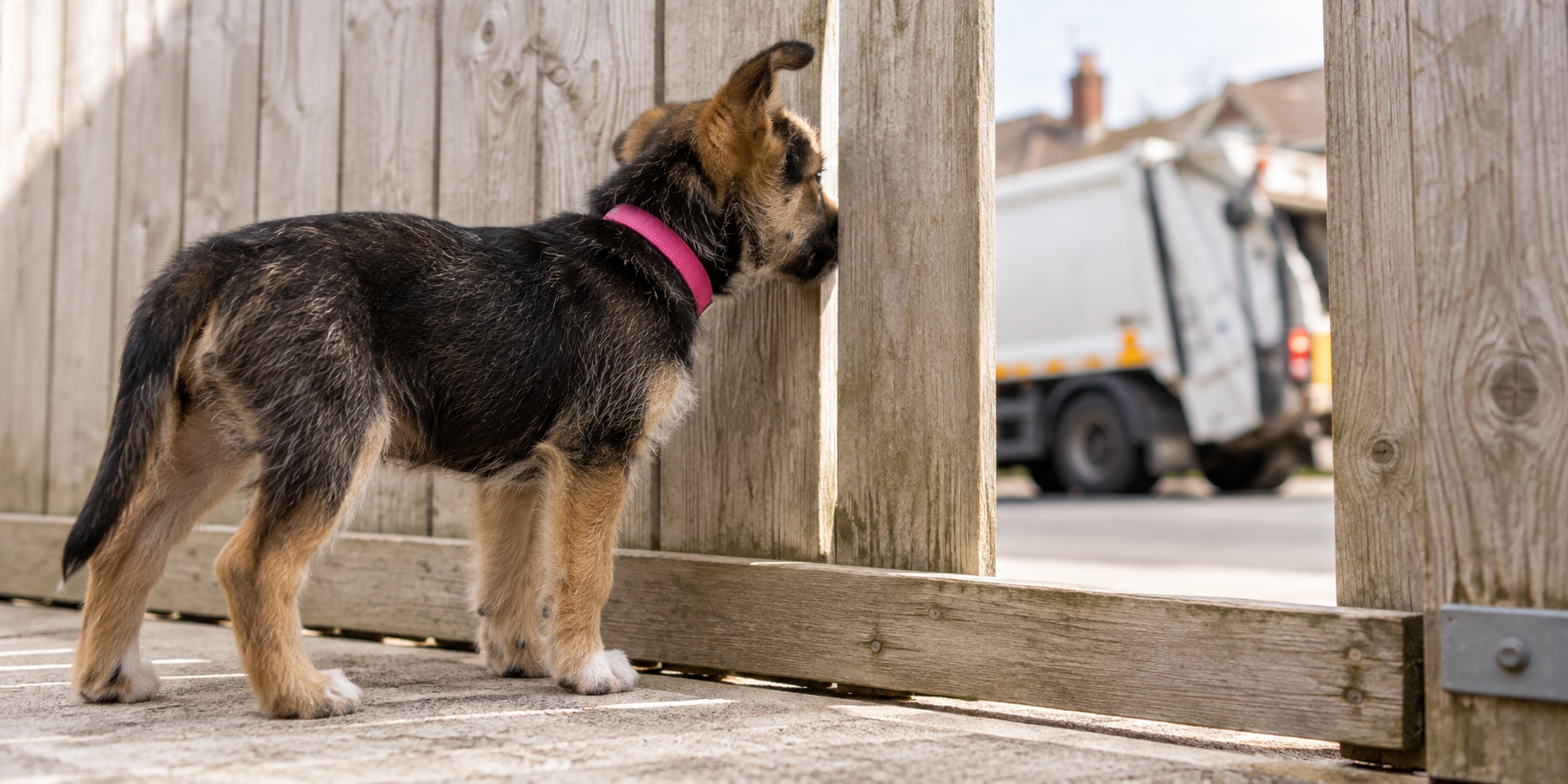
But the risk on the other side is real too, and it has no vaccine. A dog who reaches six months having never heard a motorcycle or seen a trash can is a harder problem to live with. Ask your own clinic where they sit, and ask them why.
Can I carry my puppy outside before the series is finished?
Yes, and it is the single most useful thing you can do with those weeks.
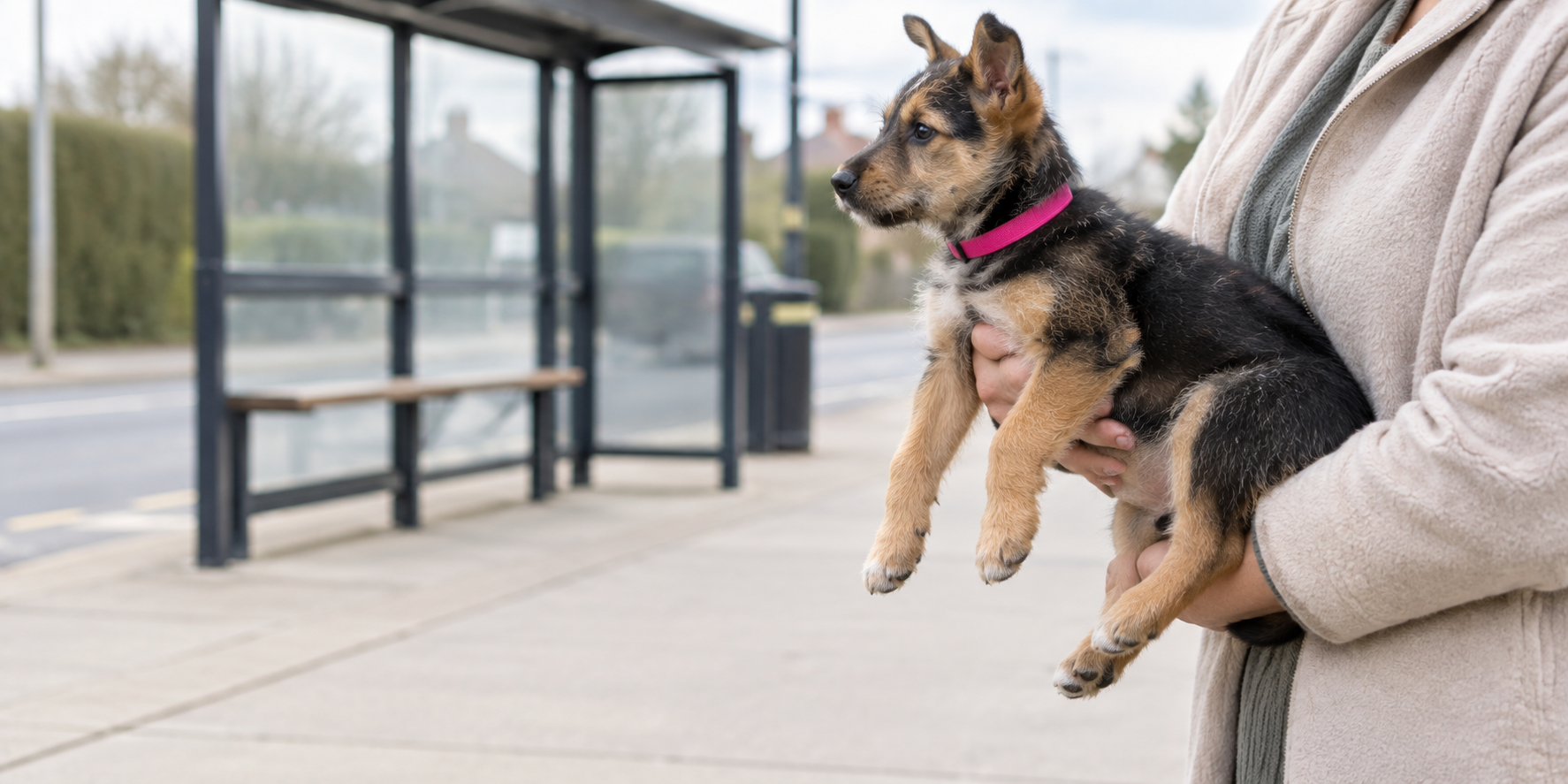
Carry them. A puppy in your arms at a bus stop, or on a bench near a busy road, is getting almost everything they need. Traffic, strollers, high-vis vests, shouting children, garbage trucks, umbrellas. All of it going in, none of it touching the sidewalk.
Drive somewhere and sit. Ten minutes in a grocery store parking lot with the window down is a curriculum.
Use other people's yards, where no unvaccinated dog has been, and let them meet fully vaccinated adult dogs. One calm adult dog teaches a puppy more in an afternoon than a field of puppies does in a month.
Have people come to you. Different heights, voices, beards, hats, canes. Anybody who looks strange to something the size of a shoebox. And handle their feet, ears and mouth daily, then give them something good afterwards.
Carrying is not a consolation prize for the weeks indoors. It is the recommended method, and the thing experienced owners say they wish they had done more of.
What happens if you take a puppy out too early?
Parvovirus, which survives in the ground for months and sometimes years, and hits hardest in exactly the age band your puppy is in.
Call your veterinarian the same day if a part-vaccinated puppy goes quiet, goes off their food, or has vomiting or bloody diarrhea. Do not wait to see how they are in the morning.
The Merck Veterinary Manual has infected dogs shedding the virus in feces for about 10 days after recovery, and indoors at room temperature it stays infectious for at least 2 months. Outdoors, protected from sunlight and drying, many months and possibly years.
It does not need another dog present to reach yours. It travels on soil, on grass and on the bottom of your shoes. Dogs between 6 weeks and 6 months old are the most vulnerable, and an incompletely vaccinated puppy sits squarely in that band.
The encouraging half, because it is also true: with supportive care, Merck puts survival at 70 to 90 percent of dogs with parvoviral enteritis, above 90 percent for those hospitalized. Treatment works, and getting there early is most of it.
That is the reason for the wait. But the risk is not spread evenly, which is what makes the middle path work. The sidewalk outside a busy dog park is a very different proposition from your own secure yard.
What should you write down before you leave the clinic?
Which vaccine, which dose number, today's date, and the date of the next one.
The reason this gets asked so often is not that the answer is complicated. It is that it was said out loud, in an exam room, while you held a wriggling puppy, a leash, a carrier and a form, and it did not survive the drive home.
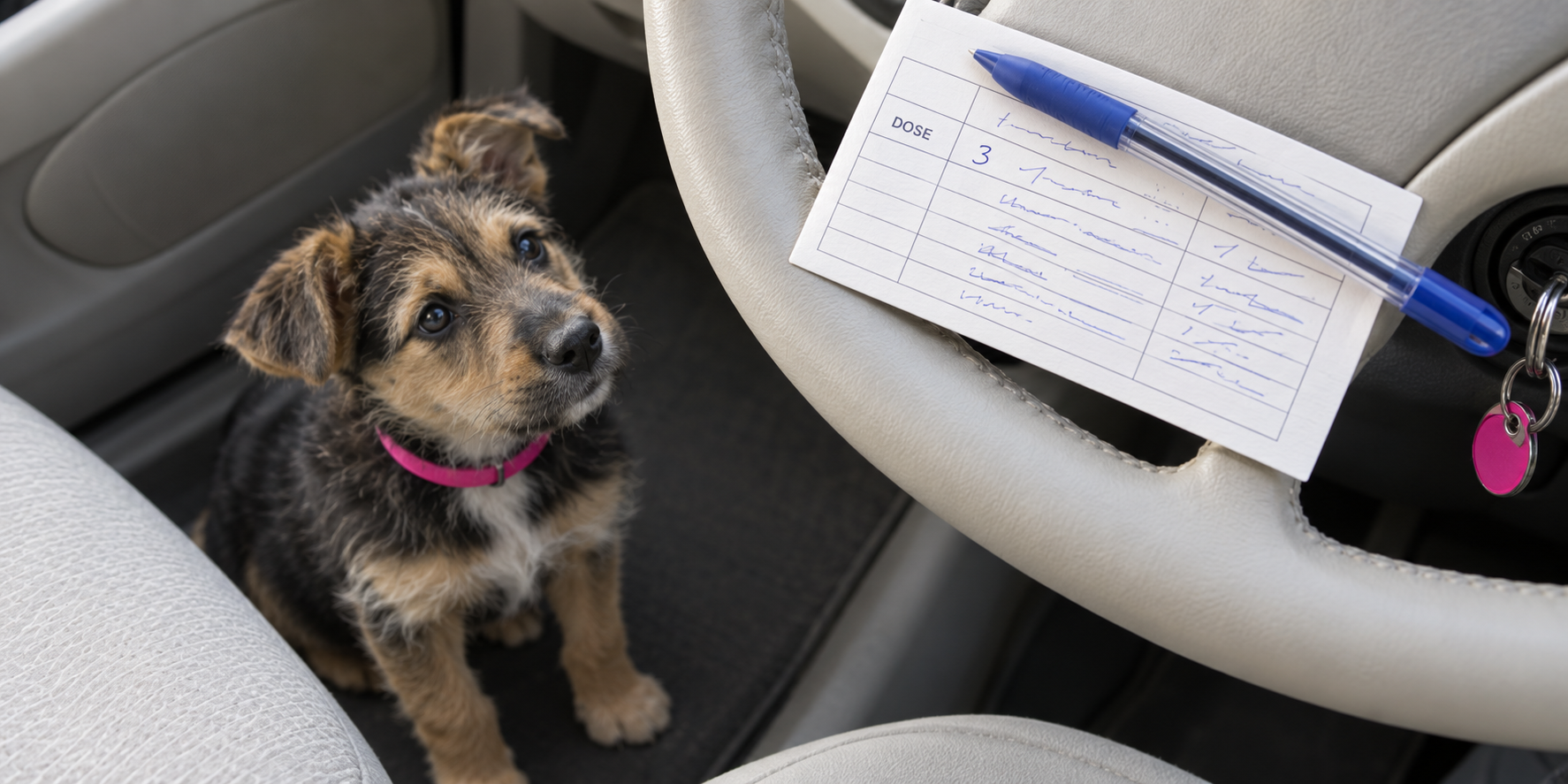
Dose number is the field everybody forgets, and in the US it is the one that decides the answer. Two weeks from dose two means nothing if there are two doses still to come.
The same goes for the deworming dates, the flea and tick treatment, and the microchip registration. That is the thinking behind giving your pet their own page on pookii, which dose and which date, so the thing you were told once in a doorway is not being held by your memory alone.
What else do people ask about the puppy second vaccination?
Is the second shot the last one?
Usually not. AAHA calls for at least three doses of a combination vaccine between 6 and 16 weeks, 2 to 4 weeks apart, and its shelter protocol boosts until 18 to 20 weeks. A two dose course is the UK pattern, which is why so much advice online does not fit a US puppy.
Can my puppy go in my yard before the series is finished?
Usually yes, if it is secure and no unvaccinated dog has been in it. Worth confirming with your clinic, because it depends on what else has been using it and on what is circulating where you live.
Can I carry my puppy outside before the wait is over?
Yes, and you really should. AVSAB's position is that socialization before full vaccination should be the standard of care, and carrying is how you do it without your puppy's feet touching ground other dogs have used.
Does the wait change if a dose was late?
It can. A dose given late shifts everything after it, which is one more reason to get a date from your veterinarian rather than counting from something you read online.
How long does parvovirus survive outside?
At least 2 months indoors at room temperature, and many months to possibly years outdoors if protected from sunlight and drying, according to Merck. The ground is the risk rather than the dogs you can see standing on it.
When does my puppy need a rabies shot?
At 3 months or older, with the exact age set by your state or local law. The details, including when it counts as protective, are on the puppy rabies shot page.
Can I take my puppy to the beach after the 2nd vaccination?
Not onto the sand yet, on a US schedule. A beach is shared ground that other dogs use, so it waits for the same date as the sidewalk: about two weeks after the final dose in the series, not the second. Until then, carry them along the boardwalk and let them take in the noise, the wind and the people from your arms.